








What's Happening?
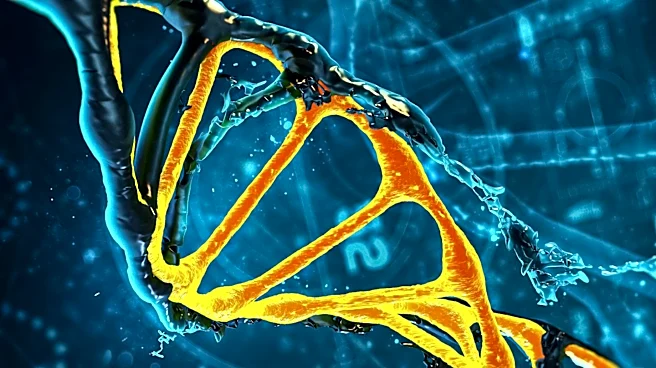
Researchers at the University of Bern, in collaboration with ETH Zurich and the Zurich University of Applied Sciences, have developed a new method for drug discovery using DNA-encoded libraries (DELs). This approach allows for the synthesis of a vast
array of small molecules, each tagged with a DNA barcode, enabling the identification of promising drug candidates. The innovation lies in using enzymes as catalysts, which operate under mild, water-based conditions, preserving the integrity of the DNA barcodes. This method overcomes the limitations of traditional chemical reactions that can damage DNA, thus expanding the range of molecules that can be synthesized and tested.
Why It's Important?
The development of new drugs is a lengthy and costly process, often hindered by the challenge of identifying molecules that specifically target disease-relevant proteins. The new method enhances the efficiency and scope of DELs, potentially accelerating drug discovery and reducing costs. By preserving DNA integrity, this approach allows for a broader chemical diversity in drug libraries, which is crucial for finding effective treatments. This advancement could lead to more rapid development of new medications, benefiting pharmaceutical companies and patients alike by bringing innovative therapies to market faster.
What's Next?
The research team plans to extend this method to additional enzyme classes and further optimize the enzymes used, broadening the range of accessible molecules in DNA-encoded libraries. This could lead to even greater diversity in drug candidates and more efficient drug discovery processes. The method's success could encourage its adoption in pharmaceutical research, potentially transforming how new drugs are developed.