



What's Happening?
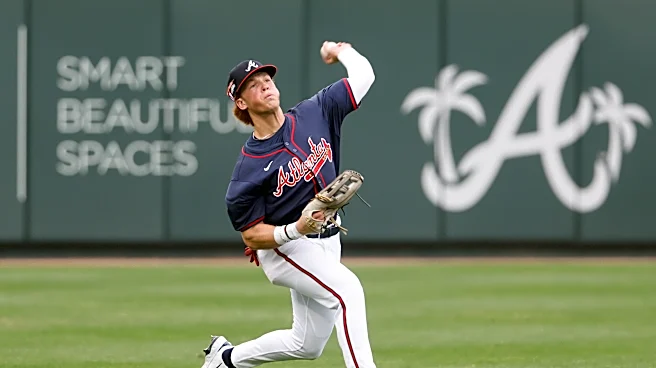
Isaiah Drake, a prospect for the Atlanta Braves, has recorded a hit in each of his first three games in minor league play this fall. Despite his team, the Glendale Desert Dogs, struggling with a 1-4 start and a significant loss in their recent game, Drake's
individual performance has been a positive highlight. He has been positioned at the bottom of the Glendale batting order but has received substantial playing time early in the season. This consistent playing time is particularly important for Drake, as he missed a considerable amount of time at the end of the previous year. His recent outing was noted as his best, featuring a 100 mph single. Drake has also demonstrated a strong ability to make contact with pitches, registering only two whiffs in 24 swings across the first three games, and showed improved plate discipline in his latest appearance.
Why It's Important?
Drake's consistent performance and health are significant for the Braves organization, especially given his previous injury setbacks. For minor league prospects, consistent playing time and strong early-season performance are crucial for development and for catching the attention of the major league club. His ability to make solid contact and avoid whiffs suggests a promising batting approach, which is a valuable asset for any player. If Drake continues this trajectory, it could indicate a positive step forward in his professional baseball career, potentially leading to higher-level opportunities within the Braves' farm system. His success could also provide a much-needed boost to the morale and future outlook of the Glendale Desert Dogs, offering a glimpse of potential talent that could eventually contribute to the Braves' roster.
What's Next?
If Isaiah Drake maintains his current level of performance and continues to receive significant playing time, the Braves organization will have a substantial sample size of his recent play to evaluate by the end of the season. This evaluation will be critical in determining his future placement and development path within the minor league system. Continued success could lead to promotions to higher minor league levels or increased consideration for future spring training invitations. His ability to stay healthy and perform consistently will be key factors in his progression. The focus will likely remain on his plate discipline, power, and overall offensive contribution as he accumulates more at-bats.
Beyond the Headlines
Drake's journey highlights the often-unseen grind of minor league baseball, where prospects battle not only opponents but also injuries and the pressure to perform. His return to form after missing significant time underscores the resilience required in professional sports. For the Braves, investing in and developing prospects like Drake is a long-term strategy to ensure a sustainable pipeline of talent for the major league team. The success of minor league players can significantly impact a franchise's future competitiveness and financial health, as homegrown talent often provides cost-effective solutions compared to acquiring established players through free agency or trades. Drake's story is a microcosm of the broader minor league system, where potential is nurtured, and future stars are forged through consistent effort and performance.