




What's Happening?
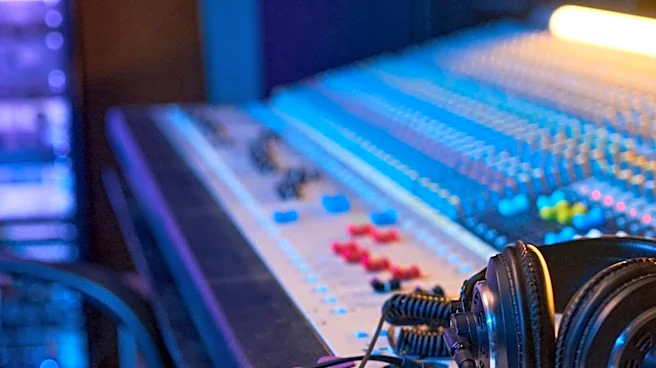
Eight-time Grammy winner Dr. Dre has publicly stated his use of artificial intelligence in his music production process. He views AI not as a threat, but as a valuable 'new tool for creativity.' Dr. Dre compared the current apprehension surrounding AI to the initial
resistance faced by drum machines and synthesizers when they were first introduced. He believes that those who perceive AI as a threat are often individuals who struggle with creative innovation. His longtime friend and business partner, Jimmy Iovine, suggested that many producers are already using AI but are reluctant to admit it, a sentiment Dr. Dre echoed. This admission comes amidst ongoing debates within the creative industries regarding the ethical and practical implications of AI.
Why It's Important?
Dr. Dre's endorsement of AI in music production is significant because it comes from a highly influential and respected figure in the industry. His perspective could encourage other artists and producers to explore and adopt AI technologies, potentially accelerating the integration of AI into mainstream music creation. This shift could lead to new sounds, production techniques, and creative possibilities, fundamentally altering how music is made. However, it also intensifies the ongoing discussion about the role of human creativity versus machine assistance, and the potential impact on jobs within the music industry. For consumers, this could mean an evolution in musical styles and a broader range of auditory experiences, while for artists, it presents both opportunities for innovation and challenges regarding intellectual property and artistic authenticity.
What's Next?
The music industry is likely to see an increased adoption of AI tools in production, mixing, and mastering, following Dr. Dre's public stance. This could lead to more companies developing AI-powered music software and services. There may also be a continued debate and potential regulatory actions regarding the ethical use of AI, particularly concerning copyright and fair compensation for artists whose work might be used to train AI models. As AI becomes more sophisticated, the line between human and AI-generated music will likely blur, prompting discussions about authenticity and artistic credit. Furthermore, Dr. Dre's embrace of AI could inspire educational institutions to incorporate AI music production into their curricula, preparing future generations of musicians and producers for an AI-integrated industry.
Beyond the Headlines
Dr. Dre's embrace of AI touches upon deeper philosophical questions about the nature of creativity and the evolution of art. Historically, new technologies have always been met with both excitement and resistance, from the camera challenging painting to synthesizers altering traditional instrumentation. AI represents the latest frontier, pushing boundaries on what constitutes 'original' creation. This development could lead to a redefinition of artistic skill, where the ability to effectively prompt and guide AI becomes a new form of artistry. It also raises ethical considerations about the potential for AI to democratize music production, making it accessible to more people, while simultaneously posing risks of devaluing human artistic labor. The long-term impact could be a symbiotic relationship between human artists and AI, where technology serves as an extension of human creative intent, rather than a replacement.