
What's Happening?
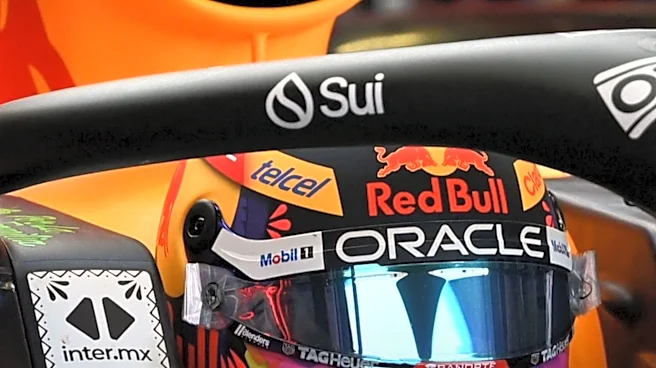
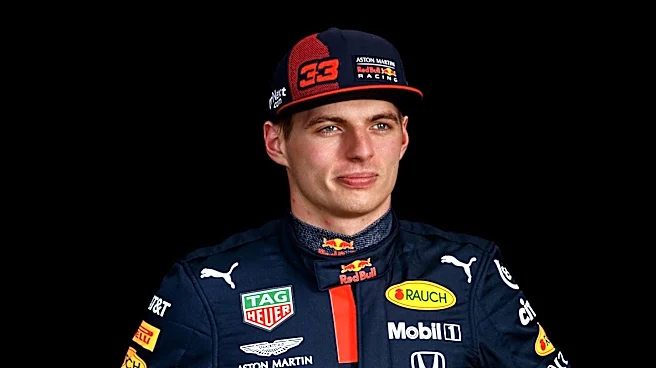
Max Verstappen, the four-time Formula 1 world champion, has stated that his 'pure pace' was stronger when he was an 18-year-old rookie compared to his current driving. During an appearance on the P1 with
Matt & Tommy podcast, Verstappen explained that while he would still win against his younger self due to experience, his raw speed was more pronounced in his early career. He clarified that the difference now lies in his understanding of how to optimize a race weekend, knowing when to take risks and when to conserve. As an 18-year-old, his primary focus was on being fast all the time, driven by the desire to win and prove himself. Now, with multiple championships under his belt and a more settled personal life, he approaches racing with a calmer, more relaxed mentality, knowing when to push for maximum performance.
Why It's Important?
Max Verstappen's reflection on his 'pure pace' as a younger driver offers valuable insight into the evolution of a top-tier athlete and the multifaceted nature of success in Formula 1. It highlights that raw speed, while crucial, is only one component of championship-winning performance. Experience, strategic thinking, and emotional maturity play equally significant roles in optimizing race weekends and managing the pressures of elite competition. This perspective is important for understanding driver development, suggesting that the journey from a prodigy to a seasoned champion involves a shift from unbridled aggression to calculated efficiency. For aspiring drivers and teams, it underscores the need to cultivate not just speed but also the mental fortitude and strategic acumen that come with experience, ultimately leading to more consistent and sustainable success in the demanding world of F1.
What's Next?
Max Verstappen will continue to leverage his accumulated experience and refined approach to racing as he pursues further championships in Formula 1. His current mentality, which prioritizes optimal race management over constant raw speed, is likely to remain a cornerstone of his strategy. This mature approach suggests that he will continue to be a formidable competitor, focusing on consistency and strategic execution throughout race weekends. For Red Bull Racing, Verstappen's ability to balance speed with experience is a significant asset, allowing the team to develop cars that complement his nuanced driving style. The ongoing evolution of Verstappen's approach will also serve as a benchmark for younger drivers entering the sport, demonstrating that sustained success requires more than just raw talent, but also continuous personal and professional growth.
Beyond the Headlines
Verstappen's comments touch upon a broader theme in elite sports: the transition from youthful exuberance and raw talent to seasoned mastery. This evolution often involves a redefinition of what 'peak performance' means, moving beyond sheer physical or technical prowess to encompass mental resilience, strategic intelligence, and emotional control. For Verstappen, the shift from an 18-year-old 'always wanting to go quick' to a champion who 'doesn't need to go quick all the time' reflects a profound personal and professional maturation. This journey is not unique to motorsport but is observed across various high-stakes fields, where initial success driven by innate ability is eventually sustained and amplified by experience and a deeper understanding of the craft. It highlights the psychological aspect of competition, where self-awareness and adaptability become as crucial as inherent skill in achieving long-term dominance.