








What's Happening?
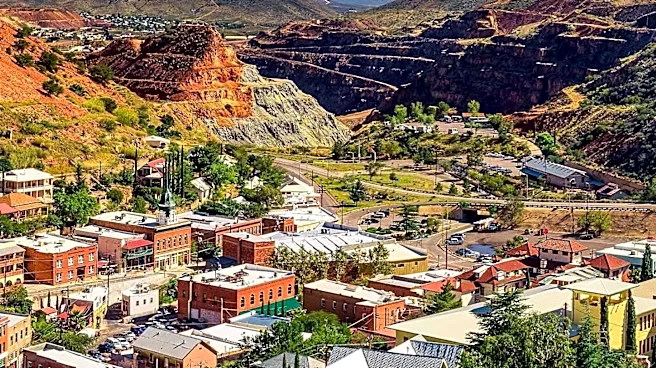
Ivanhoe Electric is progressing with its Santa Cruz Copper Project in Casa Grande, Arizona, aiming to establish a new high-quality copper mine. The company's President and CEO, Taylor Melvin, stated that the project is designed to meet increasing domestic
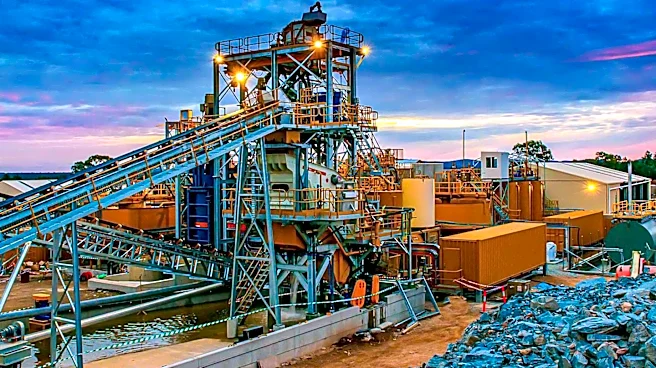
copper demand in the U.S. The Santa Cruz project is situated on private land with access to existing infrastructure, including highways, rail, natural gas, and power lines. Ivanhoe Electric has secured necessary permits for initial construction, and site development is currently underway. The U.S. currently produces less than half of its refined copper demand, relying heavily on imports. The Santa Cruz project intends to produce 99.99 percent pure copper metal directly, rather than concentrate, to address this deficit. The company released its 2026 Preliminary Feasibility Study for Santa Cruz, detailing plans for an underground mining operation to process approximately 20,000 tons of ore daily and produce an average of 75,000 tons of copper cathode annually for the first 15 years. The project utilizes an on-off heap leach pad and solvent extraction-electrowinning processing facility.
Why It's Important?
The Santa Cruz Copper Project is crucial for enhancing U.S. supply chain security and reducing reliance on imported copper. With growing demand from sectors like artificial intelligence, electric infrastructure, construction, industrial production, and national defense, domestic copper production is vital. The U.S. government has emphasized increasing domestic critical mineral production, and copper is a significant component of this initiative. The project's ability to produce pure copper metal domestically will circumvent the need to ship concentrate overseas for smelting and refining, streamlining the supply chain. This initiative aligns with broader national goals to bolster economic growth and technological advancement. The project also benefits from government support through more transparent permitting timelines, improved access to capital, and increased funding for mining education, fostering the next generation of mining professionals. The low estimated unit cash operating costs of $1.47 per pound and a capital intensity of less than $20,000 per ton of copper produced indicate strong project economics, making it a potentially significant contributor to the U.S. economy.
What's Next?
Ivanhoe Electric is focused on completing project financing by spring 2027. The company has received a Preliminary Project Letter from the Export-Import Bank of the U.S. (EXIM) for up to $1.1 billion in potential debt financing and is in discussions with commercial banks for additional financing. Parallel discussions are ongoing with potential partners for copper offtake arrangements, which may include further financing alternatives. Early site work at Santa Cruz will involve completing the box cut for the tunnel boring machine (TBM), constructing the TBM, and initiating ventilation shaft development. The company expects to begin decline development in summer 2027, with the four-kilometer access tunnel and material handling system anticipated to be completed in approximately one year. Ivanhoe Electric aims to deliver its first copper production by mid-2029. Beyond Santa Cruz, the company will continue advancing its exploration projects in the U.S. and through global partnerships with companies like BHP, Maaden, and SQM, utilizing its Typhoon™ geophysical surveying system and Computational Geosciences Inc. (CGI) data analytics technologies.
Beyond the Headlines
The Santa Cruz Copper Project represents a strategic move towards national self-sufficiency in critical minerals, reflecting a broader shift in U.S. industrial policy. The project's emphasis on producing high-purity copper metal domestically highlights a commitment to a more integrated and secure supply chain, reducing vulnerabilities associated with global geopolitical shifts and trade disruptions. The use of advanced technologies, such as The Robbins Company’s Crossover XRE tunnel boring machine, underscores an innovative approach to mining that aims for efficiency and reduced environmental impact. This technological adoption could set new industry standards for underground mining operations. Furthermore, the project's alignment with government initiatives to support domestic mining signals a long-term commitment to revitalizing the U.S. mining sector, potentially leading to increased investment in mining education and workforce development. This could foster a new generation of skilled professionals and strengthen the nation's industrial base, contributing to economic resilience and technological leadership.