





What's Happening?
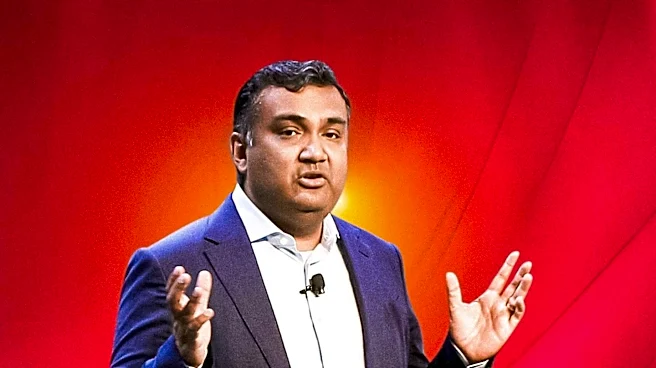
Nikesh Arora, Chairman and CEO of Palo Alto Networks Inc., has indicated that companies are increasingly allocating emergency funds towards AI defense, leading to an expected rise in cybersecurity budgets over the next two years. During the fiscal first-quarter
2027 earnings call, Arora noted that critical and severe vulnerabilities are being discovered at nearly seven times the monthly average of the previous year, making rapid patching a significant challenge for organizations. He anticipates that substantial patching needs will persist for at least 18 months, with virtual patching serving as a temporary shield for enterprises. Furthermore, Arora discussed the planned acquisition of Applied Compute, an all-stock deal valued at $4.5 billion, expected to close in the fiscal third quarter of 2027. This acquisition is central to Palo Alto's strategy to develop AI defense models that supervise other models, moving beyond traditional predetermined security controls. Applied Compute achieved $100 million in annualized revenue within 18 months of its inception, and Palo Alto expects it to contribute $1 billion in next-generation security annual recurring revenue by fiscal 2029.
Why It's Important?
The reported surge in cybersecurity spending, driven by AI defense, signifies a critical shift in corporate IT priorities. Companies tapping into 'emergency funds' for AI security underscores the immediate and perceived high-stakes threat landscape introduced by advanced AI technologies. This trend suggests a robust growth period for the cybersecurity industry, with potential consolidation as organizations seek more comprehensive solutions. The acquisition of Applied Compute by Palo Alto Networks highlights a strategic pivot towards AI-driven security solutions that involve training models to supervise other models. If successful, this approach could redefine enterprise AI defense, moving beyond reactive measures to more proactive, intelligent security frameworks. This could lead to significant competitive advantages for companies that effectively integrate AI into their security offerings, potentially setting new industry standards and influencing how businesses globally protect their digital assets against evolving AI-powered threats.
What's Next?
In the immediate future, cybersecurity budgets are projected to continue their upward trajectory over the next two years, driven by the urgent need for AI defense. This will likely lead to increased investment in advanced security technologies and potentially a consolidation within the cybersecurity market as companies seek integrated solutions. Palo Alto Networks' acquisition of Applied Compute is slated to finalize in the fiscal third quarter of 2027. Following the acquisition, Palo Alto Networks will focus on integrating Applied Compute's capabilities to build a robust 'supervision business' for AI defense. This integration aims to expand Palo Alto's AI security offerings, with the company projecting an additional $1 billion in next-generation security annual recurring revenue from this venture by fiscal 2029. The industry will be closely watching the effectiveness of this new AI-centric security paradigm and its impact on mitigating the rapidly evolving threat landscape.
Beyond the Headlines
The increasing reliance on emergency funds for AI defense points to a broader systemic challenge in how organizations budget for and perceive cybersecurity risks in the age of artificial intelligence. This reactive spending could indicate that traditional cybersecurity budgeting models are insufficient to address the rapid evolution of AI-driven threats, potentially leading to a re-evaluation of financial planning for digital security. The strategic move by Palo Alto Networks to acquire Applied Compute and focus on AI models that supervise other models suggests a fundamental shift in cybersecurity philosophy—from rule-based protection to intelligent, adaptive defense mechanisms. If this approach proves effective, it could trigger a widespread industry transformation, making AI-driven security a prerequisite rather than an optional enhancement. This could also raise new ethical and regulatory questions regarding the autonomy and oversight of AI systems designed to police other AI systems, potentially influencing future policy discussions on AI governance and digital trust.