






What's Happening?
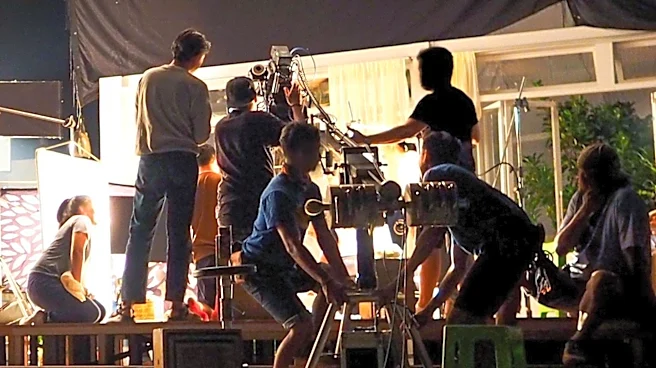
Actors and crew members on television and film sets utilize a secret code, 'ten-one,' to discreetly request a bathroom break. This information was shared by drag star Trixie Mattel, who learned the lingo during her experiences on TV sets. According to Mattel, saying
'I have to ten-one' or 'I'm taking her to ten-one' is a more elegant way to indicate the need to urinate. Studio Binder confirms that '10-1' is indeed walkie-talkie lingo for needing to pee, and '10-2' refers to needing to defecate. If more time is required in the restroom, individuals can ask to 'upgrade their 10-1.' The origin of this code is believed to be linked to the 'ten code' used in telecommunications for abbreviated speech, with 'one' referring to urination.
Why It's Important?
The use of coded language like 'ten-one' on film and television sets highlights the unique operational demands and professional etiquette within the entertainment industry. This practice underscores the need for efficiency and discretion in fast-paced production environments, where time is a critical resource. By using a code, disruptions are minimized, and a level of professionalism is maintained, preventing potentially awkward or overly explicit announcements over open communication channels. This system also reflects the hierarchical and structured nature of film sets, where clear and concise communication is essential for smooth operations. For those working in the industry, understanding such codes is part of the professional vernacular, contributing to effective teamwork and maintaining the flow of production.
What's Next?
The continued use of such codes is likely to persist within the entertainment industry due to their practical benefits in maintaining efficiency and professionalism on set. Newcomers to film and television production will continue to learn these specialized communication methods as part of their on-the-job training. While the specific origins of 'ten-one' are rooted in telecommunications, its adaptation and widespread acceptance in Hollywood demonstrate the industry's capacity to develop and maintain its own unique operational protocols. This practice may also inspire similar coded language in other high-pressure, collaborative work environments where discreet and efficient communication is valued. The anecdote serves as a reminder of the often-unseen logistical complexities involved in producing entertainment content.
Beyond the Headlines
The existence of a 'secret code' for basic bodily functions on set reveals a deeper cultural aspect of the entertainment industry: the constant pressure to maintain an illusion of seamlessness and professionalism, even in the face of human needs. It speaks to the demanding nature of production schedules and the premium placed on minimizing any potential disruption. This practice can also be viewed through a lens of workplace culture, where informal communication systems emerge to address common challenges. The contrast between the glamorous public image of Hollywood and the practical, sometimes unglamorous, realities of production work is starkly illustrated by such details. It highlights the extent to which individuals in this industry adapt their behavior and communication to fit the unique demands of their professional environment, often prioritizing the collective goal of production over individual comfort or conventional social norms.