







What's Happening?
Peraso Inc., a leader in mmWave wireless technology solutions, has successfully demonstrated high-speed 60 GHz wireless connectivity between a humanoid robot and an edge AI server. This functional validation achieved sustained data rates of approximately
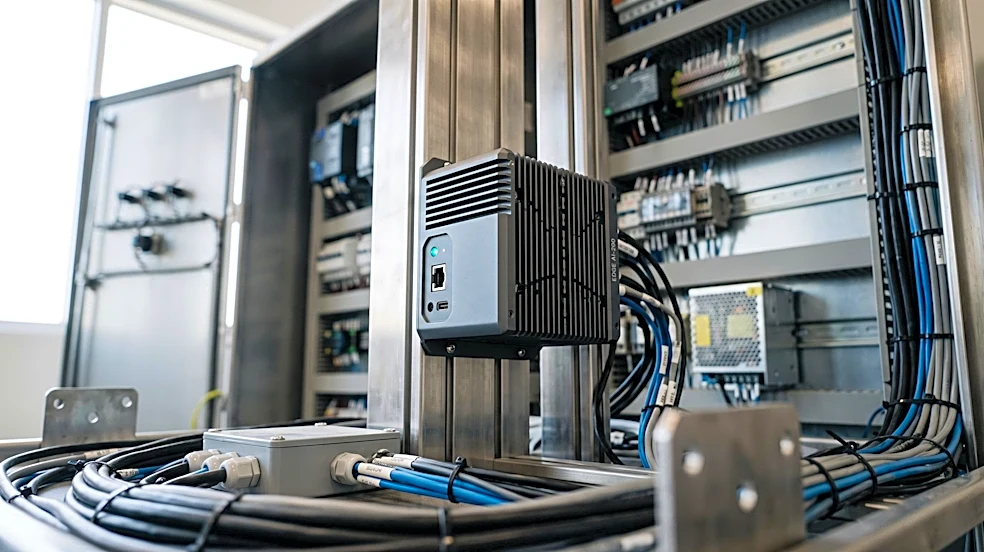
500 Mbps uplink from the robot to the server and 100 Mbps downlink. This technology facilitates the continuous transfer of sensor, video, telemetry, and operational data. Peraso's beamforming technology is designed to support multiple robots operating in close proximity by reducing interference, having previously demonstrated aggregate data rates of 50 Gbps in a confined area. The demonstration utilized a hybrid computing architecture, combining a local NVIDIA GPU for time-critical actions with a remote GPU cluster for more complex models, addressing the need for both low-latency reflexes and extensive processing power in advanced robotic systems.
Why It's Important?
The advancement in wireless connectivity for humanoid robots is crucial for their broader deployment and effectiveness, particularly in the U.S. market. As AI-powered robots become more sophisticated, their ability to continuously collect and process vast amounts of real-world sensor data is paramount for improving AI models and enabling real-time decision-making. Traditional wireless technologies often struggle to provide the necessary bandwidth and interference resilience in dense environments where many robots might operate. Peraso's 60 GHz technology offers multi-gigabit data rates and highly directional beamforming, which are essential for high-capacity data transfer and creating isolated wireless networks. This capability is vital for organizations deploying large numbers of autonomous systems that require constant data exchange with AI computing resources, potentially impacting industries from manufacturing and logistics to healthcare and defense by enabling more efficient and reliable robotic operations.
What's Next?
The successful demonstration by Peraso Inc. suggests a future where humanoid robots can operate more autonomously and intelligently due to enhanced connectivity. The company anticipates that its 60 GHz technology will become increasingly important as more autonomous systems are deployed, requiring continuous data exchange with AI computing resources. This development could lead to faster deployment of updated AI capabilities in robots and more robust performance in complex, real-world scenarios. Future steps will likely involve further integration of this wireless technology into commercial humanoid robot platforms and edge AI infrastructure, potentially driving new applications and efficiencies across various sectors. The focus will be on scaling these solutions to support large-scale deployments and ensuring the reliability and security of data transfer in dynamic environments.