





What's Happening?
Rondal and Royal Huisman are collaborating on an integrated approach to superyacht engineering, combining automated wing sails, hydrogenerators, hydrogen fuel cells, and carbon-fiber structures. This initiative aims to address the entire energy demand
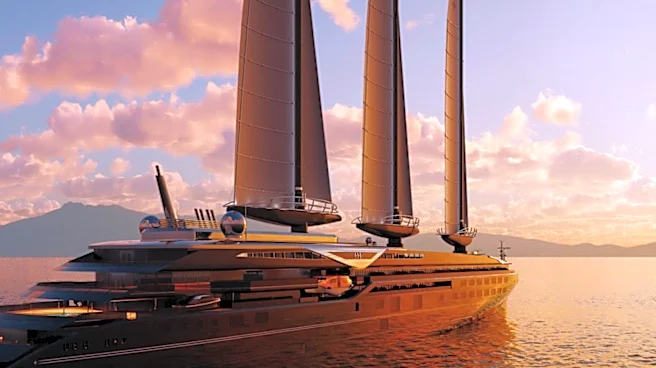
of a yacht, moving beyond traditional propulsion-focused designs. Hermen de Jong, Innovation Manager at Rondal, emphasizes the importance of connecting these systems. Their concept, AERA, a 50-meter catamaran developed with Cor D. Rover Design and Artemis Technologies, features a freestanding wing sail and an integrated system for propulsion, regeneration, and energy storage. This design seeks to reduce reliance on combustion generators, allowing for extended periods at anchor without local operational emissions. Royal Huisman received Lloyd’s Register Approval-in-Principle in 2024 for a hydrogen fuel-cell concept for sailing superyachts, marking a significant development milestone in this area. The hydrogen is stored as a high-pressure gas, avoiding the complexities of cryogenic liquid storage.
Why It's Important?
This integrated approach to superyacht design signifies a shift towards more sustainable and efficient maritime operations. By reducing dependence on fossil fuels and combustion generators, the initiative addresses growing environmental concerns within the luxury yachting sector. The development of hydrogen fuel cell technology for superyachts could set a precedent for broader adoption in the marine industry, contributing to decarbonization efforts. For owners, the promise of up to 72 hours at anchor without local operational emissions, coupled with reduced noise and vibration, enhances the onboard experience. This innovation also pushes the boundaries of composite engineering and aerodynamic design, potentially leading to advancements that could benefit other sectors requiring lightweight, high-strength structures and efficient energy management systems. The collaboration between Rondal and Royal Huisman highlights the industry's commitment to pioneering sustainable luxury.
What's Next?
While AERA remains a concept, the Approval-in-Principle for the hydrogen fuel-cell system indicates a clear path toward practical implementation. The next steps will likely involve further development and testing of the integrated systems, moving from conceptual design to prototype and eventual construction. The industry will be watching for demonstrations of AERA's proposed performance, particularly regarding its energy efficiency and emission reduction capabilities. Continued advancements in hydrogen storage and supply chain infrastructure will also be crucial for the widespread adoption of such technologies. As these innovations mature, they could influence regulatory bodies to encourage or mandate similar sustainable practices in yacht construction and operation. The success of this project could also spur further investment in green technologies across the superyacht and broader maritime industries.
Beyond the Headlines
The integration of wind power and hydrogen fuel cells in superyachts represents more than just technological advancement; it reflects a broader cultural shift towards sustainability even in luxury markets. This development challenges the traditional perception of high-end consumption as inherently resource-intensive, demonstrating that luxury can align with environmental responsibility. Ethically, it addresses the carbon footprint associated with large private vessels, offering a pathway to reduce environmental impact without compromising on performance or comfort. Legally, as maritime emissions regulations tighten globally, these innovations could position early adopters favorably. Culturally, it could redefine what constitutes 'modern luxury,' emphasizing eco-consciousness and technological sophistication. This holistic engineering approach could also inspire cross-industry collaborations, fostering a more interconnected and sustainable future for various transportation sectors.