

What's Happening?
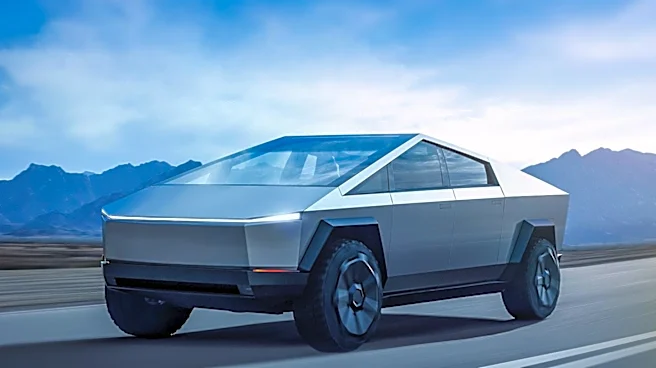
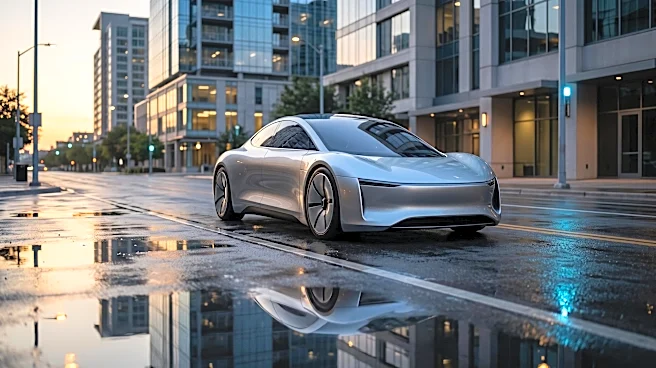
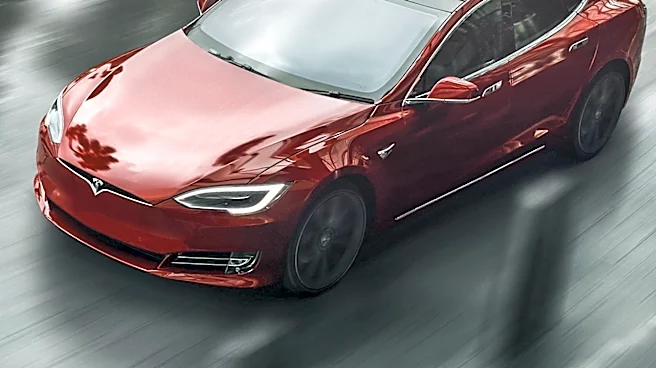
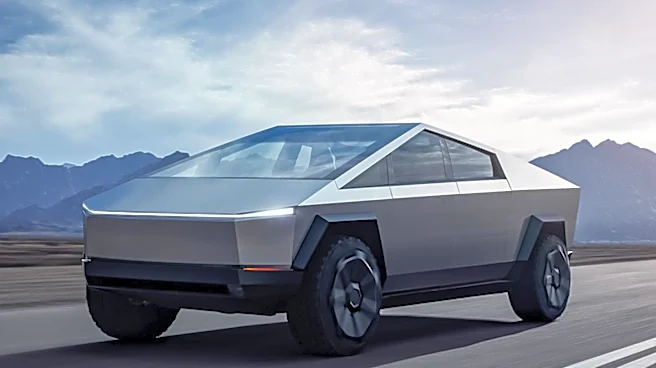
Tesla has initiated paid rides for its new two-seat Cybercab robotaxi in Austin, Texas. This vehicle is designed to operate without a steering wheel, pedals, or traditional mirrors, marking a significant step in Elon Musk's strategy to expand Tesla beyond
electric vehicles into autonomous driving and robotics. The launch aims to gather real-world data and support a broader expansion of Tesla's robotaxi network. However, the U.S. National Highway Traffic Safety Administration (NHTSA) has opened an audit into approximately 1,000 Cybercabs to investigate how Tesla determined these vehicles meet federal safety requirements. Reuters reported that Tesla has not applied for an exemption that NHTSA can provide for vehicles lacking conventional driving controls, making Tesla's self-certification a central issue in the regulatory review. This situation places Cybercab in a regulatory gray area, as many U.S. vehicle safety standards assume the presence of traditional controls.
Why It's Important?
The regulatory scrutiny from NHTSA is critical because it could significantly impact Tesla's ability to scale its autonomous driving ambitions. If regulators determine that Cybercab does not comply with existing safety rules, Tesla could face deployment restrictions, additional requirements, or delays in expanding its service. This would undermine the bullish investment thesis that heavily relies on Tesla's autonomous driving and robotaxi network as a major future revenue stream, potentially affecting its market valuation. The outcome of this audit will also set a precedent for other manufacturers developing vehicles without traditional controls, influencing the future of autonomous vehicle deployment in the U.S. The debate also highlights the challenge of adapting existing safety regulations, which were written with human drivers in mind, to accommodate rapidly evolving autonomous technologies. A prolonged dispute could hinder innovation and widespread adoption of robotaxi services.
What's Next?
NHTSA's audit will continue to examine Tesla's self-certification process and whether Cybercab adheres to federal safety requirements. Tesla may need to apply for exemptions or make modifications to its vehicles to comply with regulations, potentially leading to delays in its expansion plans. The agency is also working on updating federal safety standards to better accommodate autonomous vehicles, which could eventually ease deployment for companies like Tesla. However, the timeline for these regulatory changes is uncertain. The success of Cybercab's broader expansion hinges on Tesla's ability to resolve these regulatory hurdles and demonstrate the safety and reliability of its autonomous technology at scale. The company's ability to operate thousands of autonomous vehicles safely, consistently, and profitably will be key to realizing its long-term growth projections.
Beyond the Headlines
The regulatory challenges faced by Tesla's Cybercab highlight a broader tension between technological innovation and established regulatory frameworks. The absence of traditional controls in Cybercab pushes the boundaries of current safety standards, forcing regulators to re-evaluate and adapt. This situation raises ethical and legal questions about liability in the event of an accident involving a fully autonomous vehicle without human intervention capabilities. Furthermore, the public's trust in autonomous technology is at stake; any serious incident could have significant reputational consequences for Tesla and the wider autonomous vehicle industry. The outcome of this regulatory battle could shape the future landscape of urban transportation, influencing how cities plan for and integrate autonomous services, and potentially accelerating or decelerating the shift away from human-driven vehicles.