




What's Happening?
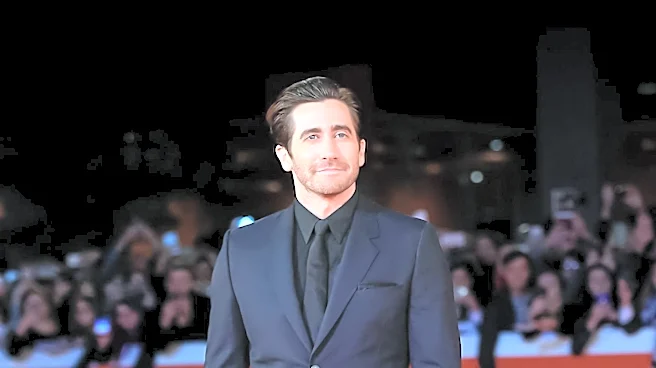
Seth Rogen has revealed his initial skepticism regarding Jake Gyllenhaal's portrayal of the titular character in the 2001 cult classic 'Donnie Darko.' In an article commemorating the film's 25th anniversary, Rogen, who played a minor role as bully Ricky
Danforth, admitted to The New York Times that he questioned Gyllenhaal's approach on set. He recalled thinking, 'I don’t know how this is going to turn out' and noted that Gyllenhaal was not playing the character in a 'very sympathetic' manner. However, as filming progressed, Rogen's perspective shifted. He came to appreciate the profound thought Gyllenhaal invested in the role, stating, 'I remember thinking he had thought about the character on a level that I, as an actor, didn’t even know was possible.' Gyllenhaal, for his part, explained that the script's depiction of adolescence felt like a 'psychedelic experience' to him, resonating with his own intense, uncomprehended feelings.
Why It's Important?
This revelation offers a unique insight into the creative process behind a film that, despite its initial commercial struggles, has achieved significant cultural impact and a dedicated cult following. It highlights the often-unseen challenges and interpretations that can occur during film production, even among talented actors. For aspiring filmmakers and actors, it underscores the importance of conviction in one's artistic vision, as Gyllenhaal's unconventional performance ultimately proved to be a critical component of the film's enduring appeal. The story also reinforces the idea that a film's true value and audience reception can evolve significantly over time, demonstrating how initial doubts can transform into widespread acclaim and recognition for groundbreaking work. This narrative contributes to the broader understanding of how certain films transcend their initial reception to become influential pieces of cinema.
What's Next?
The enduring legacy of 'Donnie Darko' continues to unfold, with a forthcoming official novelization titled 'The Philosophy of Time Travel,' penned by director Richard Kelly, slated for release in December. This novel is expected to further expand on the film's complex narrative and themes, offering new insights for its dedicated fanbase. The film's continued relevance is also evidenced by its 25th-anniversary commemoration, suggesting ongoing discussions and analyses of its intricate plot and philosophical underpinnings. The evolution of audience appreciation for 'Donnie Darko' over the past quarter-century indicates that its influence will likely persist, potentially inspiring new interpretations, academic studies, and perhaps even future adaptations or related projects, as its unique storytelling continues to resonate with new generations of viewers.
Beyond the Headlines
The journey of 'Donnie Darko' from a box office disappointment to a celebrated cult classic speaks to a deeper cultural phenomenon: the re-evaluation of art over time. This trajectory challenges the immediate commercial success metric often used to gauge a film's worth, suggesting that some works require time for audiences to catch up to their vision. The film's complex narrative and themes, which initially puzzled some, ultimately fostered a community of viewers who engaged in deep analysis and discussion, turning the film into a touchstone for exploring existential and psychological questions. This process highlights the power of niche audiences and word-of-mouth in shaping a film's legacy, demonstrating that artistic merit can eventually triumph over initial commercial hurdles. It also underscores the role of individual artistic conviction, as Gyllenhaal's commitment to his 'unconventional' portrayal was crucial to the film's unique identity.