



What's Happening?
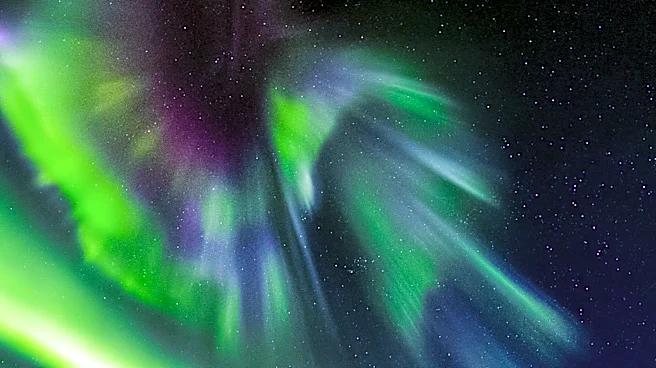
Tromsø, a city in Norway, is offering a variety of tours to experience the Northern Lights, also known as the Aurora Borealis. These tours are designed to maximize the chances of witnessing this natural phenomenon by taking participants to remote locations
away from city lights. The tours often include amenities such as campfires, warm beverages, and expert guidance on photography and the science behind the aurora. The best time to view the Northern Lights in Tromsø is from September to March, with peak visibility from late September to early April. This period coincides with the solar maximum, a phase in the sun's 11-year cycle when solar activity is at its highest, enhancing the intensity and frequency of the auroras.
Why It's Important?
The Northern Lights are a significant draw for tourism in Arctic regions, contributing to the local economy by attracting visitors from around the world. The increased solar activity during the current solar maximum offers a rare opportunity for more vibrant and frequent aurora displays, potentially boosting tourism further. This influx of tourists can benefit local businesses, including hotels, restaurants, and tour operators, while also promoting cultural exchange. However, it also poses challenges such as the need for sustainable tourism practices to protect the natural environment and local communities from the impacts of increased visitor numbers.
What's Next?
As the solar maximum continues, tour operators in Tromsø and other Northern Lights hotspots are likely to see increased demand for aurora viewing experiences. This could lead to the development of new tour packages and the expansion of existing services to accommodate more visitors. Additionally, there may be a push for more sustainable tourism practices to ensure that the natural beauty of these regions is preserved for future generations. Local governments and tourism boards might also invest in marketing campaigns to capitalize on the heightened interest in the Northern Lights during this period.
Beyond the Headlines
The fascination with the Northern Lights extends beyond tourism, as it also holds cultural and scientific significance. Historically, the aurora has been a source of inspiration and mythology for indigenous peoples in the Arctic, who often view it as a spiritual phenomenon. Scientifically, studying the aurora can provide insights into solar activity and its effects on Earth's atmosphere, contributing to our understanding of space weather and its potential impacts on technology and communication systems.