



What's Happening?
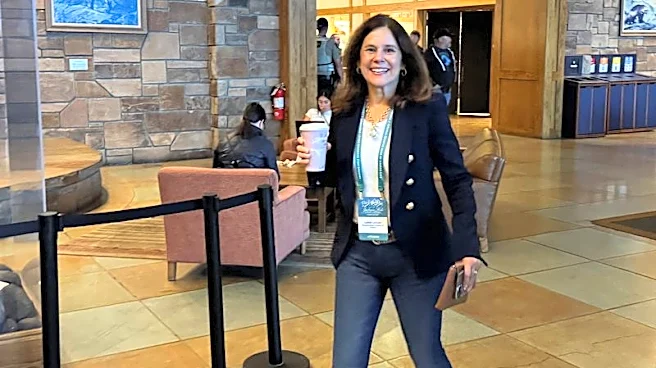
Kansas City Federal Reserve President Jeff Schmid stated on Tuesday that inflation remains a primary concern for the U.S. central bank and expressed support for policy tightening to address rising prices. Speaking at an energy conference sponsored by
the Dallas and Kansas City Fed banks, Schmid described the current interest rate environment as 'fairly accommodative' and indicated that he does not view the policy stance as restrictive. He emphasized that his focus is on how policy decisions can most effectively influence the inflation trend in the economy. Schmid also noted concerning price trends beneath the broader energy story, specifically mentioning an 'interesting dynamic' in housing, though he did not identify restrictions in other economic areas. Additionally, Schmid predicted that instant payments would surpass digital asset structures in adoption.
Why It's Important?
President Schmid's comments signal a continued hawkish stance within the Federal Reserve, reinforcing the central bank's commitment to combating inflation. His assessment that current interest rates are 'fairly accommodative' suggests a belief that further rate hikes may be necessary to achieve price stability. This is significant for U.S. businesses and consumers, as tighter monetary policy typically leads to higher borrowing costs, which can impact investment, hiring, and consumer spending. The focus on underlying price trends, beyond just energy, indicates a concern about broad-based inflationary pressures that could become entrenched. This could lead to a more prolonged period of restrictive monetary policy, affecting economic growth and potentially increasing the risk of a recession. Schmid's remarks contribute to the ongoing debate within the Fed about the appropriate path for interest rates.
What's Next?
Schmid's statements, alongside those of other Fed officials, suggest that the Federal Reserve is likely to continue its policy of raising interest rates in the near future. The next Federal Open Market Committee (FOMC) meeting will be crucial for determining the exact trajectory of these rate hikes. Market participants will be closely watching for further economic data, particularly inflation and employment figures, to gauge the Fed's next moves. The emphasis on 'tighter policy' implies that the Fed is prepared to take decisive action to bring inflation back to its 2% target, even if it means slowing economic activity. Businesses and households should anticipate a sustained period of higher interest rates, which will influence financial planning and investment strategies.
Beyond the Headlines
President Schmid's observation about the 'interesting dynamic' in housing prices, despite not identifying restrictions elsewhere, hints at the complex and uneven nature of inflation across different sectors of the economy. This suggests that while some areas might be cooling, others remain hot, making a one-size-fits-all monetary policy challenging. His prediction regarding instant payments surpassing digital assets in adoption also points to a broader shift in financial infrastructure and consumer behavior. This could have long-term implications for the banking sector, payment systems, and the regulatory landscape. The Fed's dual mandate of maximizing employment and maintaining price stability means that its decisions must consider these multifaceted economic realities, balancing the need to curb inflation with the desire to avoid undue harm to the labor market and overall economic growth.