




What's Happening?
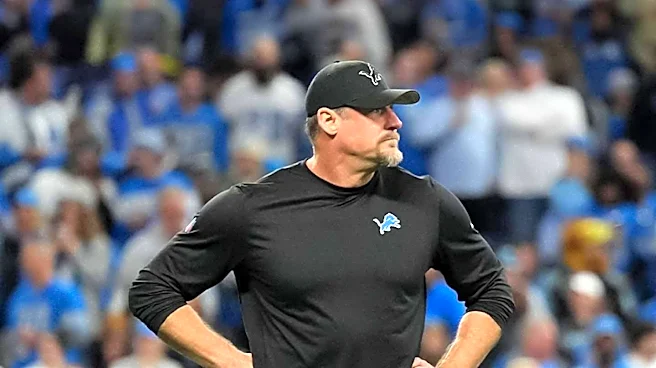
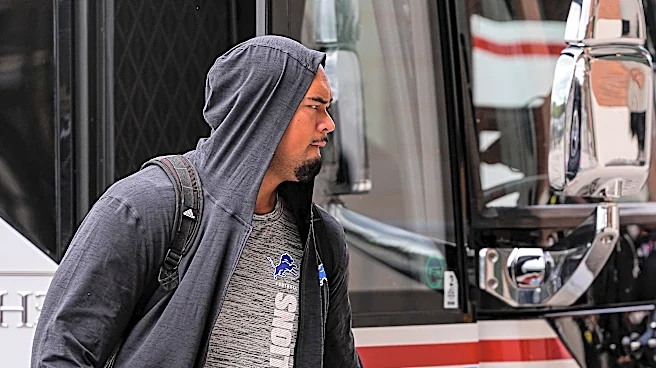
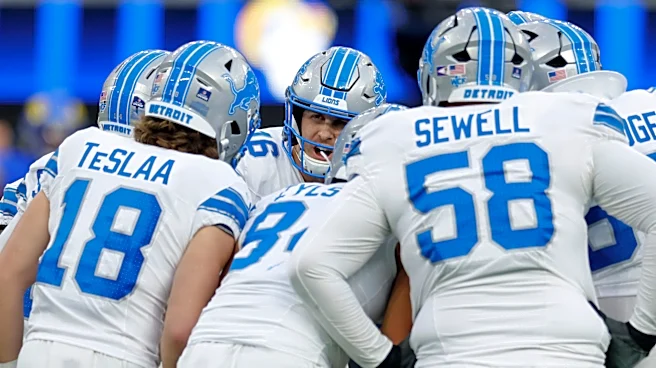
The Detroit Lions are exploring a new role for wide receiver Jackson Meeks, transitioning him to a tight end position. Head Coach Dan Campbell has articulated a vision for Meeks as a hybrid player, potentially serving as an H-back, big slot, or big skill
player. This shift is significant for Meeks, who has never played this position before. To prepare, Meeks has increased his weight from 210 to 235 pounds, aided by a regimen of creatine, weightlifting, and a supportive diet from his family. He has also been studying other players like Devin Funches and Trey McBride to understand the nuances of the position. The Lions are keen to see if Meeks can adapt to the physical demands of the role, particularly in blocking, which he acknowledges is a mindset-driven skill.
Why It's Important?
This development is crucial for the Detroit Lions as they seek to maximize the potential of their roster by utilizing players in versatile roles. For Meeks, this transition could redefine his career trajectory, offering him a unique opportunity to showcase his skills in a new capacity. The success of this experiment could influence the Lions' offensive strategies, potentially providing them with a more dynamic and unpredictable lineup. For the team, having a player who can adapt to multiple roles could be a strategic advantage, especially in a league where versatility is increasingly valued. If successful, this move could also set a precedent for other teams to follow, encouraging them to explore unconventional player roles.
What's Next?
As training camp progresses, Meeks will continue to develop his skills as a tight end, focusing on mastering the physical and technical aspects of the position. The Lions will evaluate his performance during preseason games to determine his fit in this new role. If Meeks can demonstrate proficiency, particularly in blocking, he may secure a permanent spot in the lineup. The coaching staff will likely monitor his progress closely, making adjustments as needed to ensure he can contribute effectively to the team's success. The outcome of this transition could influence future roster decisions and player development strategies within the organization.