



What's Happening?
Boeing's engineers and technical workers, represented by the Society of Professional Engineering Employees in Aerospace (SPEEA), have approved a new four-year labor contract. This agreement, which includes immediate 10% raises and subsequent annual increases
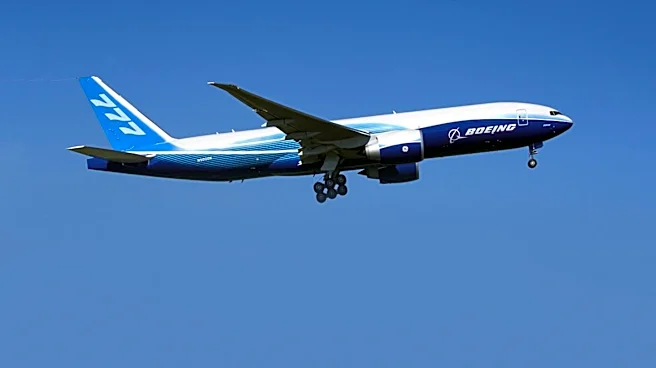
of 4% (with up to 6% based on merit), successfully averts a potential strike. The professional unit, comprising engineers, voted 67.62% in favor, while the tech unit approved the contract with 53.48% in favor. This outcome follows the workers' rejection of an earlier proposal that offered 3% annual raises. Boeing expressed satisfaction with the vote's result, which removes a significant near-term operational risk for the company as it aims to stabilize and increase aircraft production and secure federal approval for new aircraft models like the 737 MAX 10 and 777X.
Why It's Important?
The ratification of this contract is crucial for Boeing, as it prevents a strike that could have severely disrupted its operations and further delayed aircraft deliveries. Boeing is currently working to ramp up production of its popular jets and is seeking federal approval for its 737 MAX 10 and 777X models, which are already behind schedule. A strike by its largest white-collar union would have exacerbated these challenges, impacting the company's ability to meet demand and recover from past production issues. While the new contract entails higher labor costs, which may pressure profit margins, avoiding a strike ensures continuity in critical engineering and technical work, which is vital for product development, safety certifications, and overall operational stability. This stability is essential for Boeing's competitive position in the global aerospace market.
What's Next?
With the labor agreement secured, Boeing can now focus on its primary objectives: increasing aircraft production and obtaining federal approval for its delayed 737 MAX 10 and 777X programs. The Federal Aviation Administration (FAA) is reportedly considering a review of a 737 MAX software issue, which could potentially delay the MAX 10's approval. Boeing will need to address any such concerns to expedite certification and begin deliveries. The company will also continue to manage its defense segment, which, despite a recent $20 billion-plus Navy fighter contract, faces execution and fixed-price contract risks. The long-term financial impact of the increased labor costs on Boeing's margins will be closely monitored by investors and analysts.
Beyond the Headlines
This labor agreement highlights the ongoing tension between corporate financial performance and employee demands for better compensation and working conditions, even within highly skilled white-collar sectors. The successful negotiation, despite an initial rejection, underscores the power of organized labor in influencing corporate decisions and securing improved terms. For Boeing, this resolution is not just about avoiding a strike; it's about rebuilding trust and morale within its workforce, which is critical for innovation and quality control in the aerospace industry. The company's ability to navigate these internal dynamics, alongside external pressures like regulatory scrutiny and supply chain challenges, will be key to its long-term success and reputation in a highly competitive global market.