






What's Happening?
Anthony Pompliano, a prominent Bitcoin advocate and founder/CEO of Pomp Investments, has expressed tempered expectations for Bitcoin's future returns. Speaking on his podcast in August, Pompliano indicated that he does not foresee annual returns of 60%
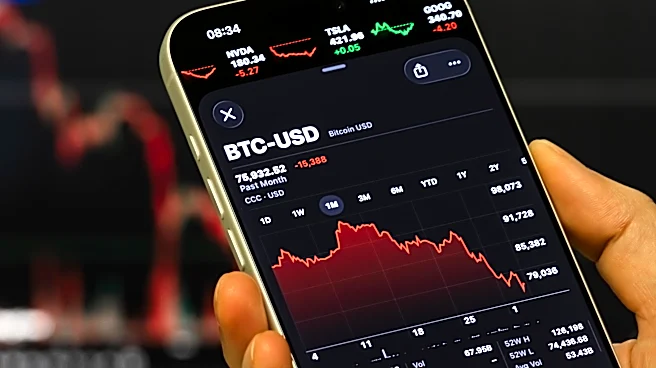
to 70% over the next decade, a significant shift from previous growth rates. This outlook comes as Bitcoin has experienced a substantial downturn, trading around $60,725 on November 26, 2026, marking a 51.8% drop from its peak of $126,080 reached on October 6, 2025. The cryptocurrency is also trading 19.2% below its 50-day moving average, and institutional investors are showing a pullback, with U.S. spot Bitcoin ETFs experiencing $5.1 billion in outflows over the past month. This net outflow suggests selling pressure from these funds to meet redemptions.
Why It's Important?
Pompliano's revised outlook on Bitcoin's future growth is significant for U.S. investors and the broader financial market. His tempered expectations suggest that the era of rapid, high-percentage returns for Bitcoin may be concluding, prompting a reevaluation of its role in investment portfolios. This perspective creates a challenging environment for Bitcoin, especially when compared to traditional stock market investments like the SPDR S&P 500 ETF Trust, which has returned 223.5% over the last decade. Investors who bought Bitcoin five years ago have seen only an 11.4% increase, lagging behind the S&P 500's 56.2% growth over the same period. The current market conditions, including a substantial price drop and institutional outflows, indicate a shift in investor sentiment and market dynamics, potentially leading to a more cautious approach to cryptocurrency investments.
What's Next?
For Bitcoin to experience a positive shift, a rise above its 50-day moving average of $75,159, which is 23.8% higher than its current price, would be a key indicator. Additionally, a return to fund inflows into U.S. spot Bitcoin ETFs would signal easing selling pressure. If both trends materialize, it could improve the five-year outlook for Bitcoin and potentially support a long-term price target of $1 million by 2035. However, without these shifts, investors may continue to face a challenging environment. The current situation suggests that Bitcoin might be best suited as a small component of a diversified portfolio for investors with a long-term perspective, prepared for potential extended periods of losses.
Beyond the Headlines
The evolving narrative around Bitcoin, from a high-growth asset to one with more moderate expectations, reflects a maturation of the cryptocurrency market. This shift could lead to a broader re-evaluation of digital assets within traditional financial frameworks. The increased scrutiny on Bitcoin's performance relative to established indices like the S&P 500 highlights a growing demand for cryptocurrencies to demonstrate sustained, competitive returns. This development may also influence regulatory discussions, as the stability and predictability of digital assets become more central to their integration into mainstream finance. The experience of investors who bought at different times underscores the importance of timing and long-term strategy in the volatile crypto market, potentially leading to more sophisticated investment approaches and risk management in the future.