




What's Happening?
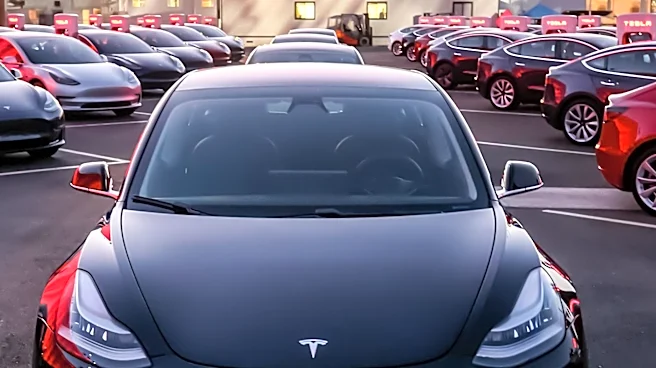
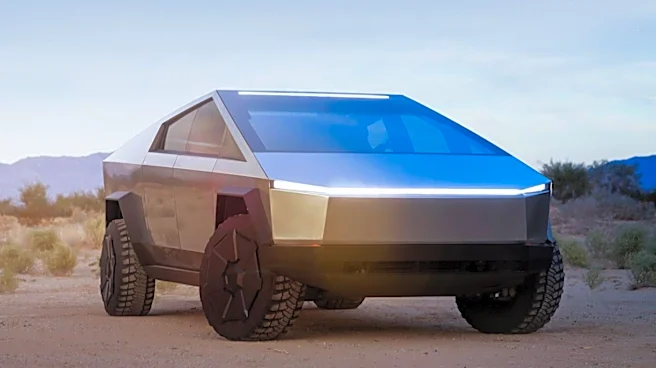
Tesla's stock has experienced a 15% decline following the company's second-quarter earnings report, despite record vehicle deliveries and revenue. The primary concern for investors is Tesla's planned $25 billion in capital expenditures (capex) for the year,
which is significantly higher than previous years. This increase in spending has raised questions about the company's ability to generate sufficient returns, as Tesla's free cash flow was negative $1.1 billion in the second quarter. The company's ambitious plans for a robotaxi network and humanoid robots have yet to show substantial progress, contributing to investor skepticism about the stock's high valuation.
Why It's Important?
Tesla's financial performance and strategic decisions are closely watched by investors and industry analysts, given its prominent position in the electric vehicle market. The company's high capex plans reflect its commitment to long-term growth and innovation, but also highlight the risks associated with such significant investments. The decline in Tesla's stock underscores the challenges of balancing growth ambitions with financial sustainability. As Tesla continues to pursue its technological goals, its ability to deliver tangible results will be critical to maintaining investor confidence and market leadership.
What's Next?
Tesla will need to demonstrate progress in its robotaxi and humanoid robot initiatives to justify its high valuation and reassure investors. The company may also explore ways to optimize its capital expenditures and improve cash flow management. As the electric vehicle market becomes increasingly competitive, Tesla's strategic decisions and technological advancements will play a crucial role in shaping its future trajectory. Investors will be looking for clear indicators of progress and profitability in the coming quarters.