






What's Happening?
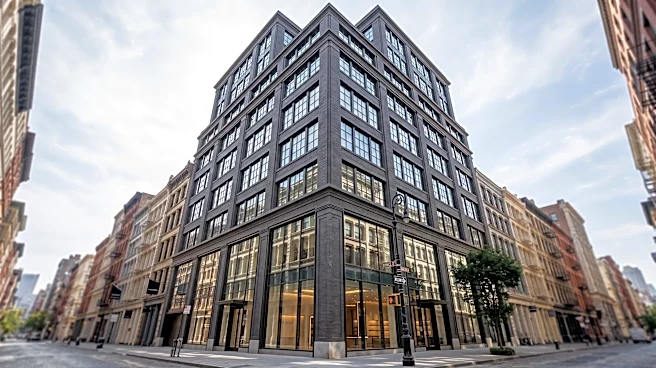
Walker & Dunlop, Inc. announced it has arranged $216 million in bridge financing to refinance 568 Broadway, a mixed-use property located in Manhattan’s SoHo neighborhood. Walker & Dunlop Capital Markets Institutional Advisory served as the exclusive advisor
to a joint venture comprising Aurora Capital, Allied Partners, and A&H Acquisitions. The financing was arranged with ACORE Capital. The property, situated at the corner of Broadway and Prince Street, is a 12-story, 390,745-square-foot building that includes both office and retail space. Its approximately 70,870-square-foot retail component is fully leased to tenants such as Hugo Boss, Athletic Propulsion Labs, GU, and Equinox. The office component houses a mix of tenants including Zocdoc, The Farmer’s Dog, and Milk Makeup. Senior Managing Director Dustin Stolly highlighted the property's premier corner positioning, Broadway frontage, strong retail tenancy, recently upgraded infrastructure, and flexible office product as key attributes. SoHo is noted as a supply-constrained office and retail submarket with limited inventory, which supports future rent growth and long-term value.
Why It's Important?
This $216 million refinancing deal for 568 Broadway in Manhattan underscores the continued strength and investment appeal of prime commercial real estate in highly desirable urban centers within the U.S. For the U.S. commercial real estate market, particularly in major cities like New York, this transaction signals ongoing liquidity and investor confidence, even amidst broader economic uncertainties. The fact that a "trophy asset" in a supply-constrained market like SoHo can secure substantial refinancing indicates that lenders and investors are still keen on properties with strong fundamentals, high occupancy rates, and premium locations. This deal benefits the joint venture owners by providing bridge financing, allowing them to manage their capital structure effectively. It also highlights the role of firms like Walker & Dunlop in facilitating large-scale real estate transactions, which are crucial for the health and dynamism of the property market. The sustained demand for office and retail space in SoHo, as noted by Dustin Stolly, suggests resilience in specific submarkets despite shifts in work patterns and retail trends, impacting property values and rental income for owners and investors.
What's Next?
The successful arrangement of this bridge financing for 568 Broadway positions the joint venture owners to continue optimizing the asset's value in the long term. With the refinancing secured, the immediate focus will likely be on maintaining the high occupancy rates and strong tenant mix that characterize the property. Given the supply-constrained nature of the SoHo market, the owners may explore opportunities for further value enhancement, such as strategic tenant improvements or lease renewals at favorable terms. The involvement of ACORE Capital as the lender suggests a continued appetite for well-located, high-quality assets in urban cores. For Walker & Dunlop, this transaction reinforces its position as a leading advisor in commercial real estate finance, potentially attracting more clients seeking similar financing solutions for their properties. The broader market will observe whether this deal sets a precedent for other trophy assets in Manhattan, influencing lending terms and investment strategies in the coming months.
Beyond the Headlines
The refinancing of 568 Broadway reflects a nuanced reality in the post-pandemic commercial real estate market. While some sectors, particularly traditional office spaces, have faced headwinds, prime mixed-use properties in vibrant, supply-constrained urban neighborhoods like SoHo continue to attract significant capital. This suggests a flight to quality, where investors and lenders prioritize assets with strong intrinsic value, diverse income streams (retail and office), and strategic locations. The property's full retail occupancy, including high-profile brands, indicates the enduring appeal of physical retail in key urban corridors, challenging narratives of its decline. Furthermore, the blend of office and retail tenants in a desirable location highlights the evolving concept of urban centers as integrated hubs for work, leisure, and commerce. This transaction could also signal a growing confidence in the long-term economic vitality of Manhattan, influencing urban planning, development, and investment patterns across other major U.S. cities as they adapt to new economic and social dynamics.