








What's Happening?
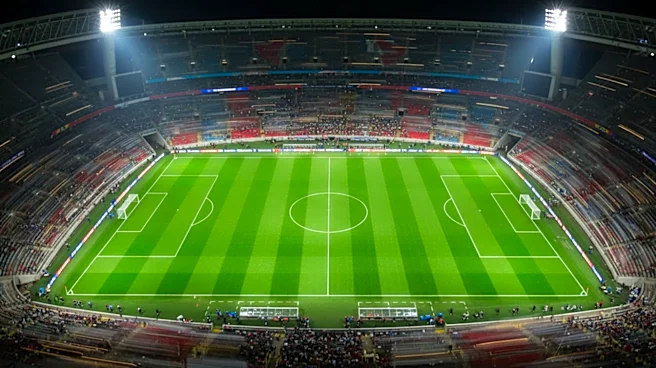
Mexico has made history by becoming the first country to host the FIFA World Cup three times, with the 2026 tournament marking its latest hosting. The event kicked off at Estadio Azteca in Mexico City, a venue with a storied past in World Cup history.
Mexico previously hosted the tournament in 1970 and 1986, each time under unique circumstances that highlighted the country's resilience and passion for soccer. The 2026 World Cup is part of a joint bid with the United States and Canada, expanding the tournament to 48 teams and setting new records for participation and duration.
Why It's Important?
Mexico's achievement in hosting the World Cup three times underscores its significant role in the global soccer community. This milestone reflects the country's ability to adapt and thrive under challenging conditions, such as the 1986 earthquake. The 2026 tournament's expanded format and joint hosting arrangement with North American neighbors highlight the evolving nature of international sports events, emphasizing collaboration and inclusivity. Mexico's hosting legacy contributes to its national identity and showcases its capacity to engage with the global sports community on a grand scale.
Beyond the Headlines
The decision to host the World Cup in Mexico multiple times speaks to the country's strategic importance in FIFA's global plans. It also highlights the potential for sports to drive economic and infrastructural development. The 2026 tournament's success could influence future bids and inspire other nations to pursue hosting opportunities. Additionally, Mexico's hosting history may serve as a case study for balancing cultural heritage with modern sports demands, offering insights into sustainable event management and international cooperation.