


What's Happening?
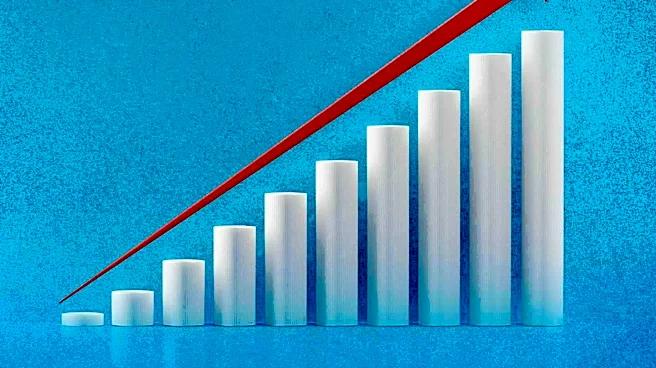
The U.S. economy has shown consistent growth, with the Real GDP increasing at an average rate of 2.18% over the past century. Recent data indicates a 2.1% growth over the last year. Despite various political and economic challenges, including multiple
military conflicts and a global pandemic, the economy has remained stable. Current forecasts predict a real growth rate of 1.8% to 2.0% for the next four quarters. The stability is attributed to factors such as AI spending and restocking, which have contributed to the recent acceleration in economic activity. However, the spread between nominal and real GDP has widened post-COVID, primarily due to inflation.
Why It's Important?
The steady growth of the U.S. economy is crucial for maintaining its position as a global economic leader. The consistent GDP growth rate reflects the resilience of the U.S. economy in the face of global uncertainties. This stability is vital for investors and policymakers as it provides a predictable environment for economic planning and investment. The divergence between nominal and real GDP highlights the ongoing challenge of managing inflation, which could impact future economic policies and interest rates. The role of AI and technological advancements in driving economic growth underscores the importance of innovation in sustaining long-term economic health.
What's Next?
Looking ahead, the U.S. economy is expected to continue its trend growth, with potential fluctuations depending on inflation rates and technological investments. Investors and policymakers will closely monitor interest rates and inflation expectations, as these factors could signal shifts in economic growth patterns. The ongoing investments in AI and technology are likely to play a significant role in shaping future economic dynamics. Additionally, the stability of credit spreads and the strength of the dollar will be key indicators of economic health in the coming months.