








What's Happening?
U.S. Small Business Administration (SBA) Administrator Kelly Loeffler and U.S. Representative Darin LaHood (IL-16) visited Illinois Wesleyan University’s newly opened Petrick Idea Center on Wednesday. The purpose of their visit was to discuss future entrepreneurship
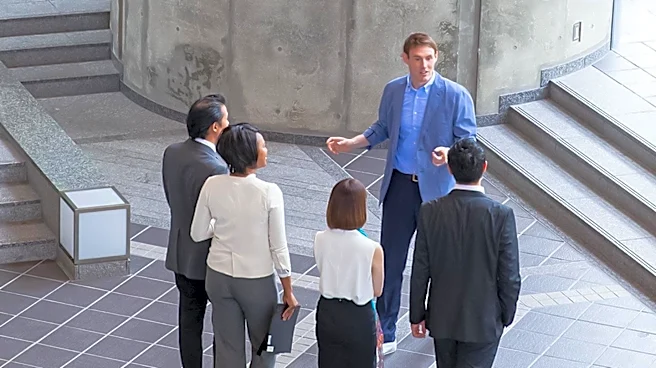
and quantum opportunities in Central Illinois. During their tour of the facility, Loeffler and LaHood hosted a roundtable discussion. Participants included Illinois Wesleyan President Sheahon Zenger, City of Bloomington Mayor Dan Brady, Marc Talluto, founder of the Talluto Center for Applied Entrepreneurship, Ben Hage, Director of the Petrick Idea Center, and several students from various academic disciplines. The discussions focused on incentivizing innovation and reducing regulations to support the 36 million small businesses in the U.S., which constitute 99% of all American businesses. President Zenger expressed appreciation for the officials' interest, validating the university's vision for a collaborative, interdisciplinary approach to problem-solving as a hub for innovation and workforce opportunities.
Why It's Important?
The visit by SBA Administrator Loeffler and Congressman LaHood to Illinois Wesleyan University's Petrick Idea Center underscores the growing national emphasis on fostering entrepreneurship and innovation, particularly in emerging fields like quantum technology. Small businesses are the backbone of the U.S. economy, accounting for 99% of all businesses, and initiatives that support their growth are crucial for job creation and economic stability. By engaging with university students and faculty, federal officials are directly connecting with the next generation of entrepreneurs and innovators, potentially influencing future policy decisions regarding small business support and technological advancement. The focus on reducing regulations and incentivizing innovation highlights a commitment to creating a more favorable environment for startups and small enterprises. For Central Illinois, this visit brings national attention and potential resources to local entrepreneurial ecosystems, such as the Petrick Idea Center and the Illinois Small Business Development Center of McLean County, aiming to expand access to capital, mentorship, and specialized expertise for aspiring business owners.
What's Next?
Following the visit, Illinois Wesleyan University and its Petrick Idea Center are expected to continue their efforts in fostering an entrepreneurial ecosystem in Central Illinois. The discussions with SBA Administrator Loeffler and Congressman LaHood may lead to further collaboration with federal agencies, potentially unlocking more resources or support for local startups and innovation initiatives. The university's ongoing programs, such as Founders Studio, entrepreneur-in-residence efforts, accelerator, and mentorship programs, will likely be strengthened. There will also be continued focus on connecting these entrepreneurial efforts with the Fisher Center for Interdisciplinary Quantum Science and Engineering, exploring how emerging technologies like quantum computing can inspire new products and businesses. The goal is to expand access to specialized expertise in business development, legal and financial matters, and capital readiness, while connecting entrepreneurs with manufacturers, customers, and investors. This engagement aims to create new opportunities for founders to access investment capital and mentorship, helping their businesses grow and contribute to the regional economy.
Beyond the Headlines
The collaboration between federal officials, academic institutions, and local businesses, as exemplified by this visit, highlights a broader trend towards integrating higher education into regional economic development strategies. Universities like Illinois Wesleyan are increasingly seen not just as centers of learning, but as vital hubs for innovation, workforce development, and entrepreneurial activity. The focus on 'quantum opportunities' signals an awareness of future technological frontiers and the need to prepare the next generation for a rapidly evolving economy. This initiative also touches upon the ethical considerations of fostering innovation responsibly, ensuring that technological advancements benefit society broadly and that entrepreneurial ventures are conducted with integrity. Furthermore, the emphasis on reducing regulations for small businesses reflects an ongoing debate about the balance between government oversight and economic freedom, with implications for how future policies will shape the competitive landscape for startups and established enterprises alike. This integrated approach aims to create a resilient and forward-looking economic environment.