



What's Happening?
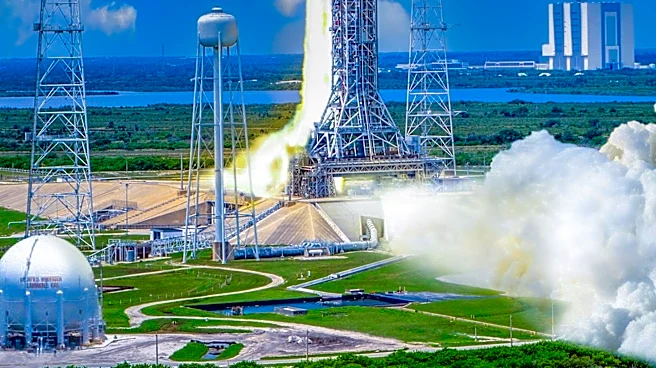
Space Florida has applied for stormwater permits across 217 acres near the Launch and Landing Facility (LLF) at NASA's Kennedy Space Center (KSC) for a new commercial aerospace facility. The application, submitted on August 28, covers preliminary site
work for future buildings, parking lots, driveways, entry roads, a stormwater management system, and associated infrastructure. While no specific company has been publicly identified as the tenant, the project is slated for the LLF, which features a 15,000-foot shuttle-landing runway managed by Space Florida under a 30-year agreement with NASA. The development will require environmental mitigation for Florida scrub-jay and gopher tortoise habitats, with Space Florida coordinating with the U.S. Fish and Wildlife Service and NASA's KSC Environmental Management Branch.
Why It's Important?
This development signifies continued growth and investment in Florida's Space Coast, reinforcing its role as a critical hub for the U.S. commercial aerospace industry. The construction of a new large-scale commercial aerospace facility will likely create numerous jobs and attract further private sector investment, boosting the regional economy. The project's location at NASA's KSC LLF leverages existing infrastructure, making it an attractive site for aerospace companies. Furthermore, the environmental mitigation efforts highlight the increasing importance of balancing economic development with ecological preservation, particularly in sensitive ecosystems like those found in Florida. This project underscores the ongoing trend of commercial entities utilizing NASA facilities to expand their operations, contributing to the broader national space strategy.
What's Next?
The stormwater permitting process is currently pending, and once approved, the initial site work, including grading and the construction of a wet detention pond, will commence. The final build-out of the commercial aerospace facility will be permitted under a future modification. Space Florida will continue to coordinate with environmental agencies to ensure proper mitigation for affected wildlife habitats. The identity of the tenant company is expected to be revealed at a later stage, which will provide more details about the specific nature of the aerospace operations. This project is part of a larger trend of economic development in the region, with other projects like Relativity Space's expansion and 'Project Horseshoe' also underway, indicating a robust future for the Space Coast.
Beyond the Headlines
The development of commercial aerospace facilities on NASA-managed land represents a significant evolution in the relationship between government space agencies and private industry. It reflects a strategic shift towards fostering a vibrant commercial space ecosystem, where private companies play an increasingly central role in space operations, manufacturing, and services. This trend has implications for national competitiveness in space, potentially accelerating innovation and reducing the cost of access to space. However, it also raises questions about the long-term management of shared infrastructure, the balance of public and private interests, and the environmental impact of industrial expansion in ecologically sensitive areas. The successful integration of these commercial ventures into existing government facilities could serve as a model for other regions seeking to grow their aerospace sectors.