










What's Happening?
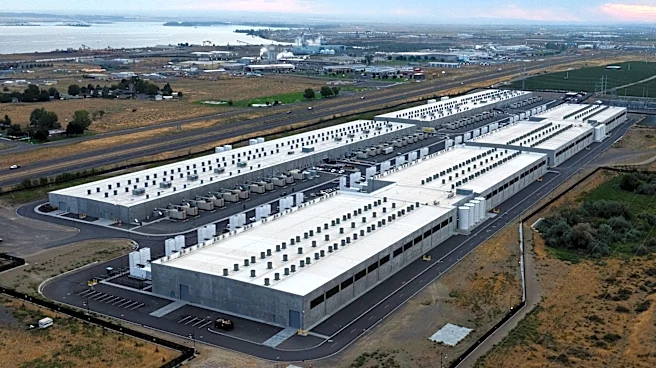
Google's AI data centers are rapidly expanding across the United States, driven by the increasing demand for artificial intelligence technologies. 'Nightline' provided an exclusive look inside one of these data centers, highlighting the scale and complexity
of operations required to support AI advancements. As these centers grow, they are becoming a focal point for discussions about their impact on local communities, including concerns over energy consumption, environmental effects, and infrastructure demands. The expansion reflects the broader trend of tech companies investing heavily in AI capabilities, which require significant computational power and data storage.
Why It's Important?
The expansion of AI data centers is significant as it underscores the growing reliance on artificial intelligence across various sectors, from business to healthcare. These centers are critical for processing the vast amounts of data needed for AI applications, which can drive innovation and efficiency. However, the rapid growth also raises concerns about environmental sustainability and resource allocation. Communities hosting these centers may face challenges related to increased energy consumption and potential environmental impacts. Balancing technological advancement with sustainable practices is crucial for ensuring that the benefits of AI do not come at an unsustainable cost to local environments and resources.
What's Next?
As AI data centers continue to expand, stakeholders, including local governments, environmental groups, and tech companies, will need to collaborate to address the associated challenges. This may involve developing new regulations or incentives to promote energy efficiency and reduce environmental impact. Additionally, ongoing dialogue with communities will be essential to address concerns and ensure that the benefits of hosting such facilities are equitably distributed. The tech industry may also explore innovations in data center design and operation to minimize their ecological footprint while meeting the growing demand for AI capabilities.