

What's Happening?
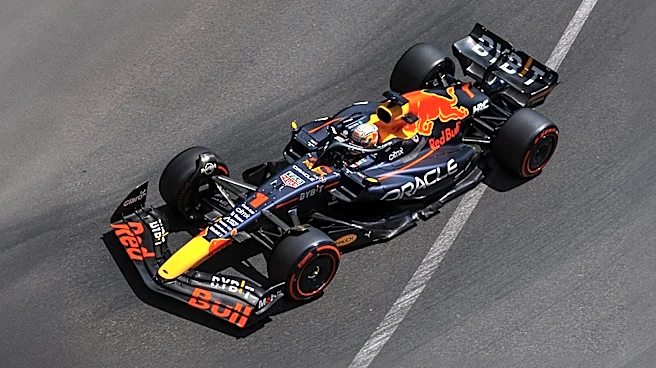
Oracle Red Bull Racing executed an unprecedented feat by running its championship-winning RB8 Formula 1 car on the railway tracks of Madrid's Metro system. The project, dubbed "On Rails," involved former F1 driver Patrick Friesacher navigating the specially
adapted vehicle through underground tunnels and railway depots. This unique spectacle was organized to commemorate the return of the Spanish Grand Prix to Madrid after a 45-year hiatus. The engineering challenge was significant, as neither the RB8 car nor the Madrid Metro tracks could be modified. Red Bull Racing's Heritage Team collaborated with Spanish engineering and creative collective Andtonic to develop bespoke metal wheels that could support the car without damaging its driveshafts, suspension, or gearbox. The team successfully designed lightweight wheels with a central hub and precision-machined spokes, allowing the full-sized F1 car to operate on the railway infrastructure.
Why It's Important?
This event highlights Red Bull's innovative marketing strategies and its commitment to pushing boundaries beyond traditional motorsport. By integrating a high-performance F1 car into an urban public transport system, Red Bull not only generated significant global media attention but also showcased advanced engineering capabilities. The stunt serves as a powerful promotional tool for the Spanish Grand Prix's return to Madrid, potentially boosting tourism and local engagement with Formula 1. For the motorsport industry, it demonstrates the potential for creative activations that can captivate new audiences and reinforce the brand image of teams and sponsors. The successful adaptation of an F1 car for railway tracks also underscores the versatility and problem-solving prowess within the engineering sector, potentially inspiring future cross-industry collaborations.
What's Next?
The success of the "On Rails" project may encourage other Formula 1 teams or major sports franchises to explore similar unconventional promotional events. This could lead to a trend of integrating high-profile sports equipment into unexpected urban or public settings to generate buzz and engage a broader audience. For Madrid, the stunt has already amplified the excitement surrounding the return of the Spanish Grand Prix, potentially leading to increased ticket sales and tourism revenue for the upcoming race. Red Bull Racing is likely to continue leveraging such creative stunts to maintain its brand visibility and reinforce its image as an innovative and daring organization within the competitive world of Formula 1.
Beyond the Headlines
Beyond its immediate promotional impact, this event touches upon the intersection of engineering, marketing, and urban infrastructure. The ability to adapt a highly specialized racing machine for an entirely different environment without altering the original infrastructure speaks volumes about modern engineering ingenuity. It also raises questions about the potential for temporary, non-disruptive uses of urban spaces for unique cultural or sporting events. The spectacle could inspire discussions on how cities can creatively utilize their existing infrastructure for public engagement and entertainment, fostering a sense of community and excitement. Furthermore, it reinforces Red Bull's brand identity as a company that consistently delivers 'crazy stunts,' which has become a significant part of its global marketing appeal.