




What's Happening?
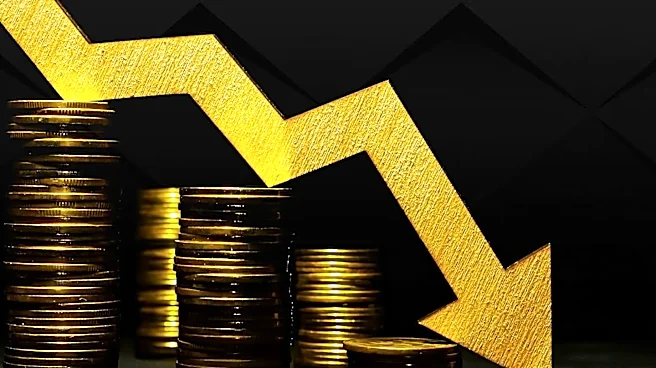
Global gold prices have experienced a decline of over 6% in 2026, following record highs achieved in 2025. As of November 11, gold was trading at approximately $4,045 per troy ounce, with its year-to-date return standing at -6.36%, according to data from
TradingView. This correction saw prices fall nearly 30% below the record high recorded in late January. Despite this global downturn, Indian gold Exchange Traded Funds (ETFs) have shown resilience, with several funds delivering positive returns, some exceeding 7.5%. This divergence is partly attributed to a weaker Indian rupee against the US dollar, which makes gold imports more expensive and supports domestic prices. The Quantum Mutual Fund Gold Outlook report indicated that gold ended October 30 at $3,875 per troy ounce, marking a monthly decline of about 6.87%. Despite the price drop, investor interest in gold remains strong, with global gold ETFs recording cumulative net inflows of $1.2 billion through October 23, and aggregate holdings increasing by approximately 10 tonnes during October.
Why It's Important?
The decline in global gold prices, while not directly impacting U.S. consumers in the same way as Indian ETFs, reflects broader economic pressures that could influence U.S. financial markets. The Quantum Mutual Fund report attributes the October correction to rising oil prices, persistent inflation, expectations of tighter U.S. monetary policy, and elevated real bond yields. These factors, particularly the anticipation of potential interest rate hikes by the U.S. Federal Reserve, make gold less attractive as it does not generate interest income, thereby putting downward pressure on its price. For U.S. investors, this trend suggests a shift in investment sentiment away from safe-haven assets like gold when real yields are high and the dollar is strong. The continued investor demand for gold ETFs, despite price corrections, indicates an underlying belief in gold's long-term value as a portfolio diversifier, especially in times of global economic uncertainty and geopolitical tensions. This dynamic could influence investment strategies and asset allocation decisions within the U.S. financial sector.
What's Next?
The near-term trajectory of global gold prices will largely depend on inflation trends, the U.S. Federal Reserve's monetary policy decisions, and movements in real yields and the U.S. dollar. While the Federal Reserve held interest rates steady in October, markets continue to anticipate the possibility of another rate hike in December, which could further impact gold prices. The Quantum Mutual Fund believes that the fundamental drivers for gold, such as elevated government debt, global economic uncertainty, and geopolitical tensions, remain intact, suggesting potential for recovery. The possibility of a stagflationary scenario in the U.S., characterized by slowing economic growth and persistent inflation, could also drive investors back to gold as a hedge. Therefore, future developments in U.S. economic indicators and Federal Reserve announcements will be crucial in determining gold's performance and its attractiveness to investors.
Beyond the Headlines
The contrasting performance of global gold prices and Indian gold ETFs highlights the complex interplay of international and domestic economic factors. While global prices are influenced by U.S. monetary policy expectations and inflation, local factors like currency depreciation can provide a buffer for domestic markets. This situation underscores the interconnectedness of global financial markets and how U.S. economic policies can have ripple effects worldwide. The sustained investor interest in gold, even during price corrections, points to its enduring role as a store of value and a hedge against uncertainty, reflecting deeper anxieties about economic stability and geopolitical risks. This trend suggests a long-term shift in investment behavior, where gold is increasingly viewed not just as a speculative asset but as a fundamental component of a diversified portfolio, particularly in an era of unpredictable global events.