





What's Happening?
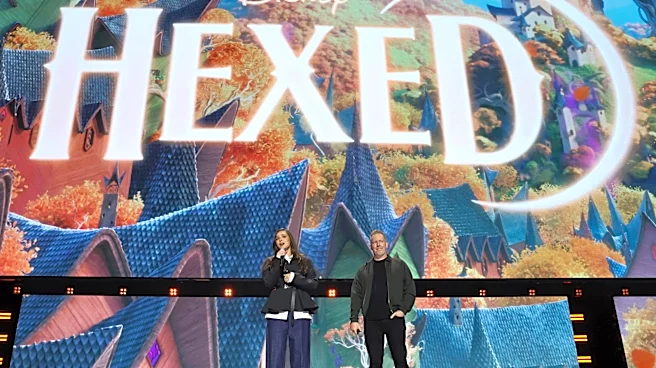
Disney's latest animated film, 'Hexed,' has garnered a 'B' grade in a recent review, which criticizes the movie for its underdeveloped characters and a narrative plagued by constant peril. The reviewer notes that the film fails to allow the audience to connect
with its characters, describing them more as 'diagnoses' of emotional problems like generational trauma and inadequacy rather than fully fleshed-out individuals. This issue, according to the review, mirrors problems found in previous Disney animated films such as 'Raya and the Last Dragon' and 'Wish.' The film's universe is also described as poorly explained, and the plot, involving a child with hidden magic and a mother determined to suppress it, is considered unoriginal and rushed, preventing deeper audience engagement. The review suggests that 'Hexed' would benefit from a slower pace to allow for character and story development before moving rapidly through plot points.
Why It's Important?
The critical reception of 'Hexed' is important for Disney, a major player in the U.S. entertainment industry, as it reflects on the studio's ongoing creative direction in animated features. Consistent criticism regarding underdeveloped characters and rushed narratives, as highlighted by comparisons to 'Raya and the Last Dragon' and 'Wish,' could impact audience perception and box office performance. For consumers, particularly families, these reviews influence viewing choices and expectations for quality storytelling from a studio known for its rich character development. A trend of films failing to resonate emotionally with audiences could lead to a decline in brand loyalty and a shift in consumer spending towards other entertainment options. This feedback also provides valuable insights for filmmakers and animators within the industry, emphasizing the importance of character investment and narrative pacing in creating impactful stories.
What's Next?
The reception of 'Hexed' may prompt Disney to re-evaluate its storytelling approaches in future animated productions. While the film is already released, its critical feedback could influence upcoming projects, potentially leading to a greater emphasis on character development and world-building. The studio might consider incorporating more audience-grounding elements and allowing narratives to unfold at a more deliberate pace, addressing the criticisms of 'constant peril' and 'underdeveloped characters.' Future marketing strategies for Disney's animated films might also adapt to highlight deeper emotional connections and character arcs, aiming to reassure audiences of a return to the studio's traditional strengths in storytelling. The ongoing discussion among critics and audiences about the quality of recent Disney animations will likely continue to shape expectations for the studio's future releases.
Beyond the Headlines
The recurring critique of Disney's recent animated films, including 'Hexed,' 'Raya and the Last Dragon,' and 'Wish,' points to a broader shift in storytelling trends within the animation industry. The emphasis on 'generational trauma' and 'feelings of inadequacy' as character diagnoses, rather than fully explored personalities, suggests a potential move towards more thematic, issue-driven narratives at the expense of traditional character arcs. This could reflect a societal trend where audiences are increasingly exposed to and expect discussions around complex psychological and social issues in media. However, the criticism also highlights the challenge of integrating these themes without sacrificing fundamental storytelling principles like character investment and narrative coherence. The unanswered question about the absence of fathers in Disney films, as noted in the review, also touches upon cultural and familial representations in children's media, suggesting a deeper, perhaps unintentional, pattern in the studio's creative choices that could warrant further examination.