










What's Happening?
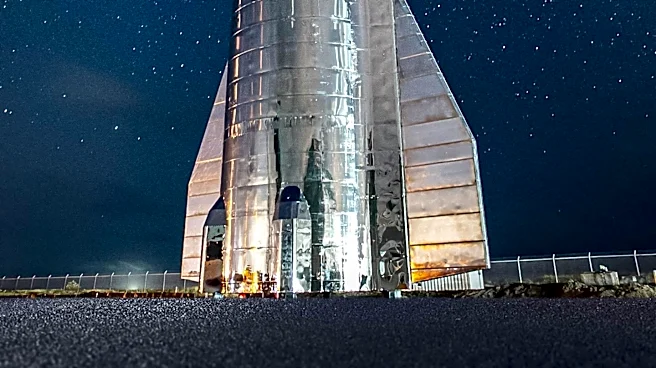
SpaceX has received approval from the Federal Aviation Administration (FAA) for the 13th test flight of its Starship rocket system. This test is scheduled to take place on July 16, 2026, from the Starbase in South Texas. The Starship, which is part of SpaceX's
ambitious plans to transport humans to the Moon and Mars, will carry 20 new-generation Starlink satellites. These satellites are designed to offer enhanced bandwidth and utilize advanced laser communication technology. The test flight will also include a controlled landing of the Super-Heavy Booster in the Gulf of Mexico. This marks a significant step in SpaceX's efforts to refine the Starship's capabilities and reliability.
Why It's Important?
The successful execution of this test flight is crucial for SpaceX as it continues to develop its Starship system, which is central to its long-term goals of space exploration and colonization. The new Starlink satellites are expected to improve global internet coverage, which could have significant economic and social impacts. Additionally, the test flight's success could bolster investor confidence in SpaceX, especially following recent fluctuations in its stock value. The outcome of this test will also influence SpaceX's future launch schedules and its ability to meet its ambitious timelines for human space travel.
What's Next?
Following the test flight, SpaceX will analyze the data to assess the performance of the Starship and its new technologies. If successful, this could pave the way for more frequent and complex missions, including potential crewed flights. The company will also continue to work on refining the Starship's design and capabilities, with the goal of achieving operational status for missions to the Moon and Mars by 2026. The results of this test will likely influence future regulatory approvals and partnerships with governmental and commercial entities.