







What's Happening?
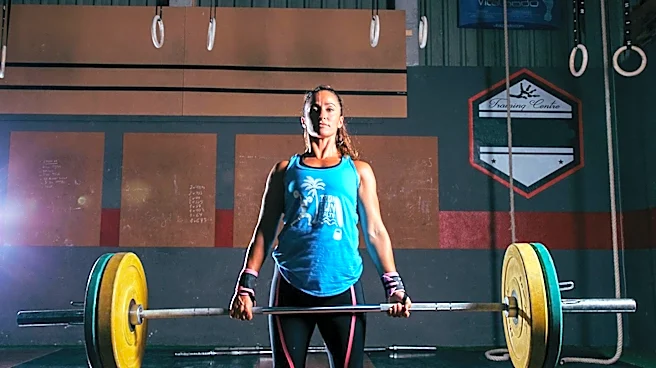
New research published in the Journal of Affective Disorders indicates that various types of strength training can lead to a reduction in depression symptoms among women diagnosed with anxiety disorders. The study involved 49 young women with anxiety symptoms who
were not regularly strength training. Participants were divided into two groups: one performing moderate-to-high intensity lifting (70-80% of max capacity) and another doing lighter lifting (20% of max capacity) over an eight-week period, with one-on-one supervised sessions. Both groups experienced significant decreases in depression symptoms, with the high-intensity group showing a 54% drop and the low-intensity group a 43% drop, though the differences between the groups were not statistically significant due to the study's size. The findings suggest that resistance exercise training, even at lower intensities, can offer substantial antidepressant benefits. Experts emphasize that exercise should be part of a comprehensive mental health care plan, not a standalone solution.
Why It's Important?
This study is important because it highlights a non-pharmacological intervention that can significantly improve mental health outcomes for women with anxiety disorders, specifically by reducing depression symptoms. Given that women are twice as likely as men to experience anxiety and depression, these findings offer a valuable, accessible, and potentially empowering tool for a large segment of the population. The discovery that even low-intensity weightlifting can be effective broadens the accessibility of this intervention, making it less intimidating for individuals new to exercise. This could lead to increased recommendations for strength training as a complementary therapy in mental health care plans, potentially reducing reliance on medication alone for some individuals. The emphasis on supervised sessions also points to the importance of structured support and accountability in achieving these benefits, suggesting a role for fitness professionals in mental health support.
What's Next?
Future research will likely aim to replicate these findings with larger and more diverse populations, including men, to confirm the generalizability of the antidepressant effects of strength training. Studies could also explore the optimal intensity, frequency, and duration of weightlifting interventions for mental health, as well as the underlying mechanisms through which strength training impacts depression and anxiety. Mental health professionals and healthcare providers may increasingly consider incorporating strength training recommendations into treatment plans for patients with anxiety and depression. This could lead to the development of specialized exercise programs designed in collaboration with mental health experts. Additionally, there might be a push for greater integration of fitness and mental health services, potentially through community programs or insurance coverage for exercise-based therapies, making these interventions more widely available.
Beyond the Headlines
Beyond the immediate clinical implications, this study sheds light on the multifaceted nature of mental well-being, emphasizing that physical activity contributes significantly to psychological health. The finding that the social element of supervised sessions and the structure of a workout plan contribute to mental health benefits suggests that exercise is not just about physiological changes but also about behavioral activation, routine, and social connection. This challenges the narrow view of exercise solely as a means for physical fitness, positioning it as a powerful tool for combating isolation and fostering a sense of accomplishment. It also underscores the importance of finding enjoyable and sustainable exercise routines, rather than focusing solely on intense physical exertion, for long-term mental health benefits. This broader understanding could encourage a more holistic approach to health, where physical and mental well-being are seen as deeply interconnected and mutually reinforcing.