






What's Happening?
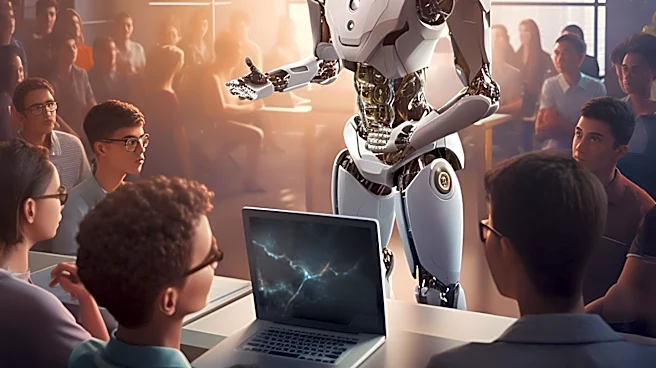
SAP has introduced a new AI-enabled Workforce Upskilling Assistant designed to deliver personalized, AI-driven learning directly within the flow of daily work. This initiative aims to redefine traditional workforce development approaches, which often
struggle to keep pace with rapid technological changes. The assistant integrates with platforms like Microsoft Teams, Slack, and SAP SuccessFactors, providing adaptive micro-learning and timely nudges to employees. This shift moves away from conventional annual training cycles and standalone learning systems, embedding learning into the culture and workflows. SAP's vision, termed 'The Autonomous Enterprise,' emphasizes human progress by allowing intelligent systems to manage operational burdens, thereby empowering individuals to focus on tasks requiring unique human judgment, strategy, and creative problem-solving. This approach is supported by SAP's research, which indicates that 62% of C-suite executives are dissatisfied with the connection between people data and business performance.
Why It's Important?
This development is significant for U.S. businesses as it addresses the critical need for continuous workforce adaptation in the face of accelerating AI integration. Traditional training methods are proving insufficient to equip employees with the necessary skills for an AI-driven future. By embedding learning directly into daily work, SAP's solution can help U.S. companies maintain a highly skilled and adaptable workforce, reducing skill gaps and enhancing productivity. This approach also fosters employee trust by ensuring that technology augments human capabilities rather than replacing them, which is crucial for managing the human side of AI adoption. For U.S. industries, this means a potential increase in efficiency, innovation, and employee engagement, ultimately contributing to stronger economic performance and global competitiveness. Companies that invest in such intentional workforce readiness and governance will be better positioned to lead in the AI era.
What's Next?
The introduction of SAP's Workforce Upskilling Assistant suggests a broader trend towards integrated, AI-powered learning solutions in the U.S. corporate landscape. Businesses are likely to increasingly adopt similar tools to ensure their employees remain proficient and relevant. This will necessitate a re-evaluation of existing HR and learning and development strategies, with a greater emphasis on continuous, personalized learning experiences. Furthermore, the concept of 'The Autonomous Enterprise' will likely drive discussions around job redesign and the optimal collaboration between human employees and AI agents. Companies will need to invest in both AI platforms and robust governance frameworks to ensure that these technologies are implemented ethically and effectively. The success of these initiatives will depend on how well organizations can integrate AI into their core operations while prioritizing human-centric approaches to work and development.
Beyond the Headlines
Beyond the immediate benefits of upskilling, SAP's initiative highlights a deeper philosophical shift in the relationship between humans and technology in the workplace. By positioning AI as a tool to free up human cognitive bandwidth for higher-value tasks, the 'Autonomous Enterprise' model challenges the narrative of AI as solely a job displacer. This approach could lead to a redefinition of 'meaningful work,' emphasizing creativity, critical thinking, and interpersonal skills that machines cannot replicate. However, it also places a greater responsibility on companies to ensure equitable access to these advanced learning tools and to manage the psychological impact of AI on employees, such as potential anxiety about role changes. The ethical implications of AI-driven learning, including data privacy and algorithmic fairness in skill assessment, will also become increasingly prominent, requiring careful consideration and robust governance to build and maintain employee trust.