



What's Happening?
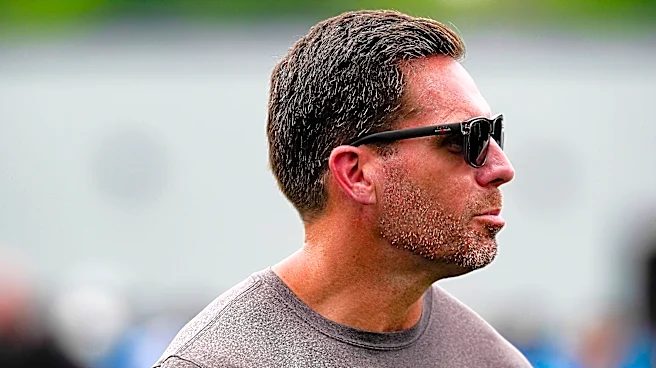
David Tepper, owner of the Carolina Panthers and founder of Appaloosa Management, experienced a significant financial gain of approximately $2 billion from his hedge fund's investments in tech stocks, particularly benefiting from the artificial intelligence
boom. This success propelled his fortune to $19.4 billion. Concurrently, his NFL team, the Carolina Panthers, is enduring its sixth consecutive losing season, marked by a league-worst two wins. Tepper's frustration with the team's performance became public when he threw a drink into the stands during a game, resulting in a $300,000 fine from the NFL for 'unacceptable conduct.' He has since expressed regret for his behavior. The Panthers' struggles include frequent coaching changes and an inability to secure a successful quarterback, despite mortgaging the team's future for University of Alabama quarterback Bryce Young. The team also faces challenges off the field, including a failed $800 million practice facility project in South Carolina.
Why It's Important?
This situation highlights the contrasting fortunes of a prominent U.S. billionaire across different investment sectors: the highly successful, data-driven world of hedge fund management and the complex, often unpredictable realm of professional sports ownership. Tepper's ability to generate substantial returns in the tech market, particularly through strategic investments in AI, underscores the robust growth and profitability within that sector. Conversely, his difficulties with the Carolina Panthers illustrate the unique challenges of managing a sports franchise, where financial investment does not always guarantee on-field success or public approval. The public incident and subsequent fine also bring into focus the scrutiny faced by high-profile team owners and the NFL's code of conduct. The financial implications of dismissing coaches and the failed practice facility project demonstrate the significant capital expenditures and potential losses associated with sports team ownership, even for a successful financier.
What's Next?
The Carolina Panthers are set to conclude their challenging season, with fans expressing growing frustration over the team's performance and Tepper's management. The team's trade for Bryce Young means they will forfeit their 2024 first-round draft pick, which is now projected to be the number one selection, a tough pill for fans to swallow given the availability of other top prospects like Caleb Williams. This decision will likely impact the team's rebuilding efforts in the upcoming seasons. Tepper has also expressed interest in building a new facility in Charlotte, but negotiations are expected to be complex following the highly visible failure of the Rock Hill project. The NFL will continue to enforce its code of conduct, and Tepper's future actions as an owner will likely remain under public and league scrutiny. The financial success of Appaloosa Management, however, suggests Tepper will continue to be a significant player in the financial markets.
Beyond the Headlines
The narrative surrounding David Tepper extends beyond immediate financial gains and team performance, touching upon the broader trend of finance billionaires acquiring professional sports teams. This phenomenon, also seen with Steve Cohen's ownership of the New York Mets and Josh Harris's acquisition of the Washington Commanders, reflects the appeal of sports franchises as appreciating assets with significant media and real estate opportunities. However, Tepper's experience underscores a critical distinction: success in finance does not automatically translate to success in sports management. The operational complexities of an NFL team, which involves a large organization with diverse personnel, differ vastly from managing a smaller hedge fund. This situation also raises questions about the public's expectations of team owners, who are increasingly seen as stewards of community assets rather than just investors. The emotional investment of fans, as evidenced by the reaction to Tepper's behavior, highlights the cultural significance of sports beyond mere business ventures.