



What's Happening?
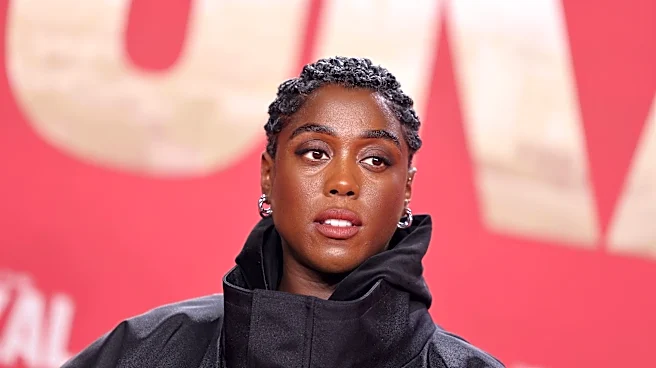
Actress Lashana Lynch recently celebrated her birthday, drawing attention to her past statements regarding the importance of challenging traditional ideas of masculinity. In a 2021 interview with Harper's Bazaar, Lynch emphasized the need to call out
harmful behavior and highlighted the significant role women play in driving this societal change. Her comments underscore a broader conversation about gender roles and the impact of ingrained masculine norms on society. Lynch's advocacy aligns with contemporary movements seeking to redefine and broaden understandings of gender, moving away from restrictive stereotypes. Her public stance contributes to ongoing dialogues within the entertainment industry and beyond, encouraging critical examination of societal expectations.
Why It's Important?
Lashana Lynch's advocacy is important because it contributes to a growing public discourse on gender equality and the deconstruction of harmful stereotypes. By challenging traditional masculinity, she addresses issues that can lead to toxic behaviors, mental health struggles, and societal inequalities. Her platform as a prominent actress amplifies these messages, potentially influencing a wide audience, particularly younger generations who look to public figures for guidance and inspiration. This push for re-evaluation can foster healthier interpersonal relationships, promote inclusivity, and encourage a more equitable society. The entertainment industry, through figures like Lynch, plays a crucial role in shaping cultural narratives and challenging norms, making her statements particularly impactful in driving social change.
Beyond the Headlines
Lynch's statements delve into the deeper cultural implications of traditional masculinity, which often imposes rigid expectations on men, limiting emotional expression and perpetuating harmful power dynamics. Her call to action suggests a need for a collective re-education on what it means to be masculine in a modern context, moving towards a more fluid and inclusive understanding of gender. This extends beyond individual behavior to systemic issues within institutions and media representations. The long-term shift could involve a re-evaluation of educational curricula, workplace cultures, and media portrayals to promote healthier gender identities and interactions, ultimately fostering a more empathetic and understanding society. Her perspective highlights the ongoing evolution of gender roles and the continuous effort required to achieve true gender equity.