
What's Happening?
A significant trend is emerging in the footwear industry, with numerous sneaker brands now producing shoes that closely resemble Birkenstock's iconic designs, particularly the Boston clogs. This development
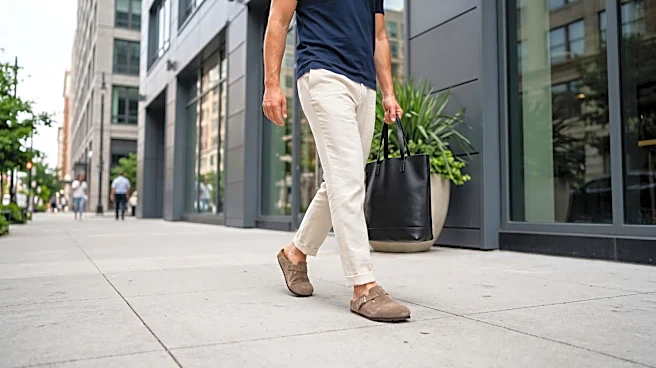
follows Birkenstock's post-COVID-19 resurgence and its continued success, which has seen the 250-year-old brand expand into new categories like bridal-wear and balletcore. Brands such as Reebok, Adidas, and Vans have introduced their own Birkenstock-style mules, including the Reebok Classic Mule, Adidas Adimule, and Vans Harbor Mule VR3. Initially, many of these models were region-exclusive, driving up international demand before their global release. While these new offerings adopt the 'Birks' formula with soft suede uppers and cork footbeds, they also incorporate brand-specific details, such as Vans' skate shoe cushioning or Reebok's layered logo-inspired upper, maintaining their unique brand identity.
Why It's Important?
This trend signifies a notable shift in consumer preferences and market strategies within the U.S. footwear industry. The adoption of Birkenstock-style designs by major sneaker brands indicates a move towards comfort, versatility, and a more relaxed aesthetic, potentially influencing future product development across the sector. For consumers, this means a wider array of choices that blend the comfort of clogs with the athletic appeal of sneakers. For businesses, it highlights the importance of adaptability and responding to evolving fashion cycles. Birkenstock's continued success, even as competitors emulate its style, underscores its strong brand equity and the enduring appeal of its core designs. This trend could lead to increased competition in the 'comfort footwear' segment, potentially driving innovation and new collaborations between traditional and athletic footwear brands.
What's Next?
The proliferation of Birkenstock-style footwear from sneaker brands suggests that this trend is likely to continue and evolve. Consumers can expect to see more variations and interpretations of the clog and mule silhouette from a broader range of brands. This could also lead to Birkenstock itself further diversifying its product line, potentially venturing more deeply into athletic-inspired designs to compete in the space it has influenced. The market may also see increased collaborations between comfort-focused brands and athletic brands, blurring the lines between traditional footwear categories. Retailers will likely adjust their inventory to reflect this demand for versatile, comfortable, and stylish options. The emphasis on unique brand details within these Birkenstock-coded shoes indicates a future where brands strive to differentiate themselves while still adhering to popular aesthetic trends.
Beyond the Headlines
This trend reflects a deeper cultural shift towards prioritizing comfort and practicality in fashion, a movement accelerated by recent global events. The blurring of lines between 'casual' and 'fashionable' footwear challenges traditional sartorial norms and encourages a more fluid approach to personal style. It also speaks to the power of enduring design, as Birkenstock's centuries-old aesthetic continues to influence contemporary fashion. The phenomenon of sneaker brands adopting these styles also highlights the cyclical nature of fashion, where classic designs are continually reinterpreted and integrated into new contexts. This evolution suggests a future where footwear choices are less dictated by rigid categories and more by individual comfort, versatility, and a blend of different style influences, ultimately empowering consumers with more diverse and adaptable options.