








What's Happening?
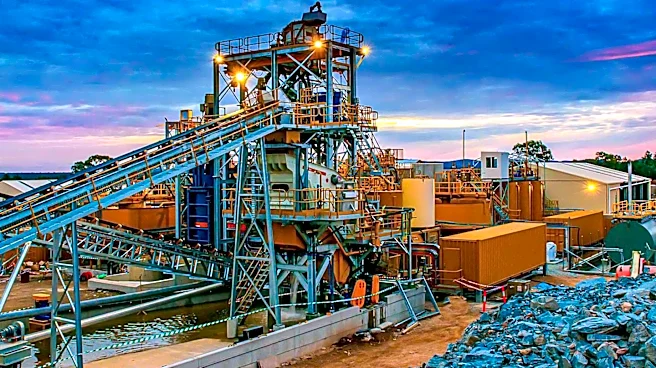
MP Materials, a leading U.S. rare earth producer, has announced it is no longer reliant on China for key inputs, including chemical reagents used in rare earth processing. This strategic shift was confirmed by CFO Ryan Corbett at Gabelli’s 50th Annual
Automotive Symposium. The company has developed alternative supply sources, absorbing additional costs to maintain competitiveness. MP Materials, which operates the Mountain Pass mine in California, also reported robust third-quarter 2026 earnings. The company posted an adjusted profit of $8.8 million, or $0.04 per share, surpassing analyst expectations of a $0.01 loss. Revenue nearly tripled to $147.7 million, significantly exceeding the $117.37 million consensus estimate. Neodymium-praseodymium (NdPr) production increased by 41% to a record 1,018 tonnes, with sales volumes jumping 94% to 1,020 tonnes. The company also completed magnet qualification with General Motors, with commercial magnet deliveries expected to commence in Q4 2026.
Why It's Important?
MP Materials' independence from Chinese rare earth supplies marks a significant step towards strengthening the U.S. domestic supply chain for critical minerals. This move reduces geopolitical risks and enhances national security by ensuring a stable supply of materials essential for advanced technologies, including electric vehicles, wind turbines, and defense systems. The company's strong financial performance, characterized by increased production and revenue, underscores the growing demand for rare earths and the viability of domestic production. The qualification to supply General Motors is a pivotal development, signaling the company's entry into the high-demand automotive magnet market. This will not only boost MP Materials' revenue streams but also contribute to the localization of EV supply chains in the U.S., reducing reliance on foreign manufacturers for crucial components. The expansion of magnet manufacturing facilities in Texas further solidifies the U.S.'s position in the global rare earth magnet market, which is currently dominated by China.
What's Next?
MP Materials anticipates commencing commercial magnet deliveries to General Motors in the fourth quarter of 2026, with revenue from this segment expected to build gradually. The company plans to expand its magnet manufacturing capacity, with a second facility in Texas, dubbed 10X, targeted for commissioning in 2028. This plant is projected to have an annual production capacity of 7,000 tonnes of magnets, contributing to a total target of 10,000 tonnes annually, making MP Materials a significant producer outside China. The company also aims to increase its upstream NdPr oxide production capacity to 6,000 tonnes annually to meet the anticipated surge in demand from new magnet manufacturing facilities. Management expects Q4 sales of approximately 1,000 tonnes of NdPr at a realized price of around $100 per kilogram, supplemented by an additional $8 per kilogram in price-protection income.
Beyond the Headlines
The strategic shift by MP Materials to eliminate reliance on Chinese rare earth inputs highlights a broader global trend towards de-risking supply chains and fostering domestic industrial capabilities. This move could encourage other U.S. companies in critical sectors to seek alternative, more secure supply sources, potentially leading to a more resilient and diversified global economy. The company's success in developing alternative suppliers, even if at a higher cost, demonstrates a commitment to long-term strategic independence over short-term cost optimization. This could set a precedent for government policies and corporate strategies aimed at balancing economic efficiency with national security interests. Furthermore, the expansion of rare earth processing and magnet manufacturing in the U.S. could stimulate job growth, foster technological innovation, and establish new industrial ecosystems, contributing to a more robust domestic manufacturing base.