







What's Happening?
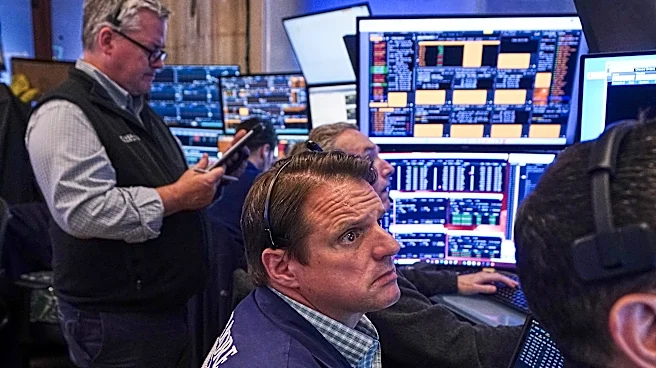
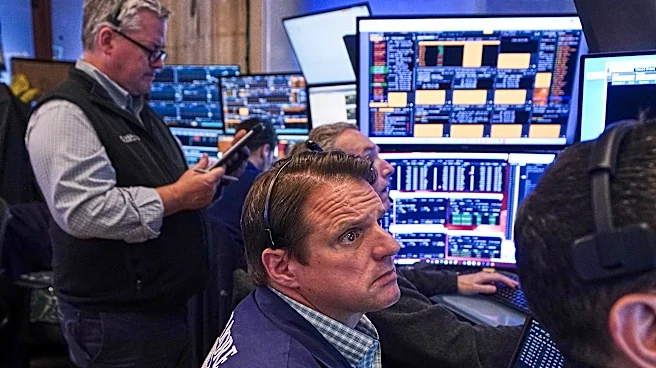
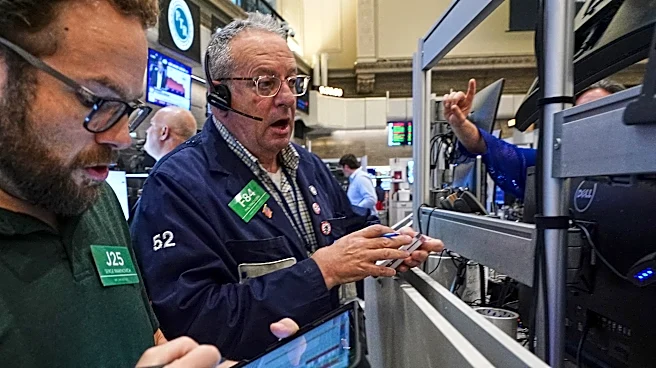
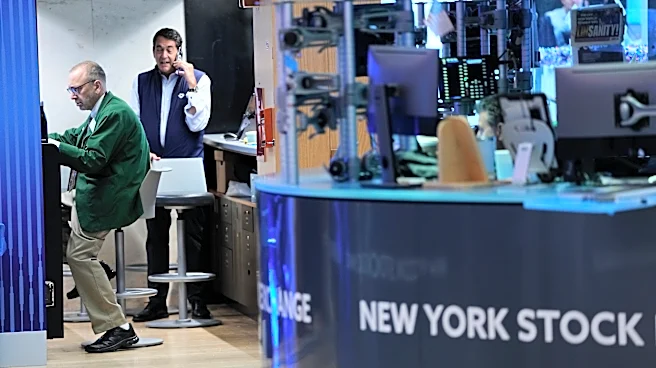
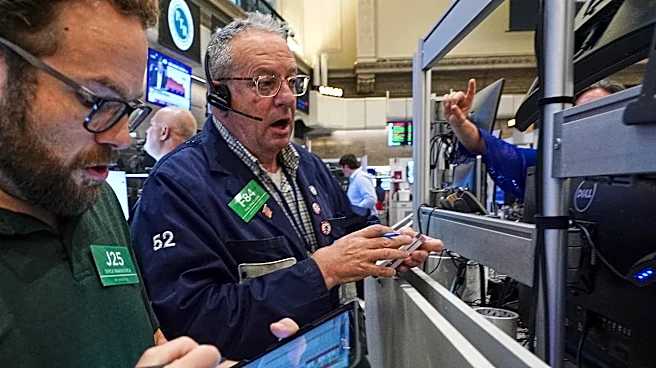
U.S. stocks experienced an uptick as Wall Street continues to show strong interest in companies benefiting from the artificial intelligence boom. The S&P 500 rose by 0.4%, marking its fourth winning week in the last five, while the Dow Jones Industrial
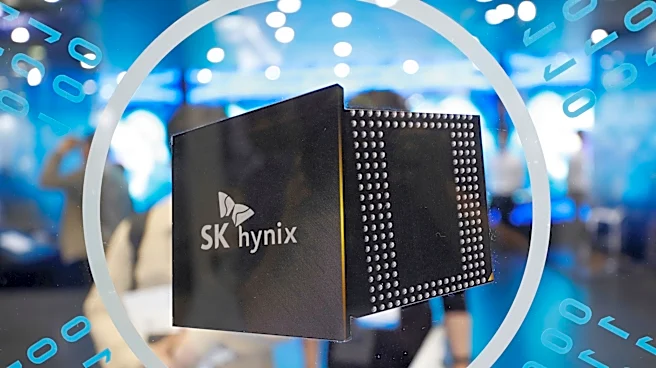
Average and the Nasdaq composite also saw gains. SK Hynix, a South Korean memory chip maker, made a notable debut on the Nasdaq, raising approximately $26.5 billion and closing with a 13.1% gain. This surge is attributed to the growing demand for computer memory driven by AI advancements. However, there are concerns about the sustainability of AI stock prices, given the rapid growth and potential overvaluation. Additionally, Delta Air Lines reported strong profits despite higher fuel costs, and Circle Internet Group received U.S. regulatory approval to establish a bank, further integrating blockchain technology into the financial system.
Why It's Important?
The rise in U.S. stocks highlights the significant impact of the AI boom on the financial markets, with companies like SK Hynix and Nvidia leading the charge. This trend underscores the growing influence of AI-related stocks on Wall Street, which could shape investment strategies and market dynamics. The upcoming earnings reports from major U.S. banks will be crucial in determining whether current stock valuations are justified. Furthermore, the integration of blockchain technology into the U.S. financial system, as seen with Circle Internet Group, indicates a shift towards digital assets and their potential role in the economy. These developments could have far-reaching implications for investors, businesses, and policymakers as they navigate the evolving financial landscape.
What's Next?
As the focus shifts to the upcoming earnings season, investors will closely monitor the performance of major U.S. companies to assess the sustainability of current stock valuations. The results from key financial institutions like Bank of America, Citigroup, and JPMorgan Chase will provide insights into the health of the economy and the potential impact of rising interest rates. Additionally, the ongoing developments in the AI sector and the integration of blockchain technology will continue to influence market trends and investment decisions. Stakeholders will need to adapt to these changes and consider the long-term implications for the financial industry.