
What's Happening?
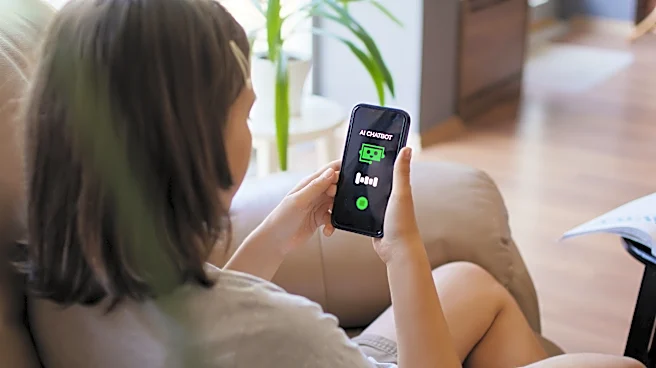
A growing number of teenagers in the U.S. are turning to AI chatbots for emotional support, as highlighted in a recent opinion piece. This trend is attributed to the availability and non-judgmental nature
of AI, which contrasts with the perceived lack of understanding from human connections. Surveys indicate that a significant percentage of teens use AI chatbots regularly for mental health advice. The article argues that while AI can offer some benefits, such as helping teens articulate their feelings, it cannot replace the essential human relationships needed for emotional well-being.
Why It's Important?
The reliance on AI for emotional support among teens underscores a broader cultural issue where young people lack trusted human connections. This trend could have significant implications for mental health, as AI cannot provide the empathy and understanding that human relationships offer. The situation highlights the need for society to foster environments where children feel safe and valued by real people, rather than relying on technology for emotional support. This shift could impact how mental health services are structured and the role of technology in emotional well-being.
What's Next?
To address this issue, there is a call for stronger safeguards around AI use by teens, including independent safety audits and policies that prevent dependency on AI for emotional support. Additionally, there is a need to rebuild the human safety net around children, ensuring they have access to supportive relationships at home and in schools. This involves training parents and educators to be more emotionally available and responsive to children's needs, potentially reshaping educational and parenting practices.