





What's Happening?
The Earthling Co. is advocating for a shift towards eco-friendly home products, emphasizing the reduction of single-use plastics and water-heavy liquid formulations. The company highlights that liquid soaps, for instance, can be up to 80% filler water,
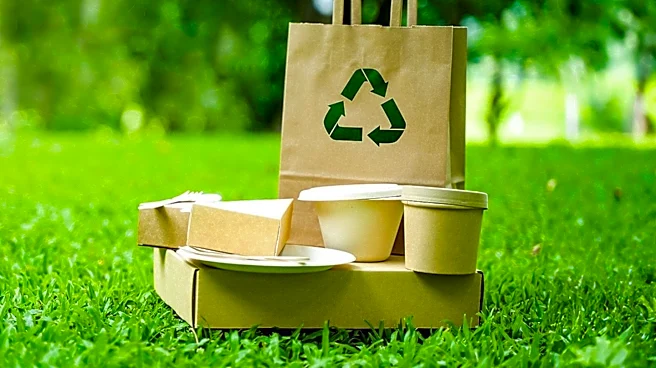
necessitating heavy plastic packaging and contributing to higher shipping emissions. In contrast, solid bars eliminate water and plastic, delivering concentrated active ingredients in lightweight, recyclable, or compostable packaging. The Earthling Co. suggests starting with high-impact areas like bathrooms and kitchens, which heavily rely on consumable products packaged in plastic. Recommended swaps include replacing bottled shampoo and body wash with solid bars, and liquid dish soap and synthetic sponges with solid dish soap blocks and natural fiber brushes. The company also promotes reusable cloths over paper towels, noting that a single reusable dishcloth can replace up to 15 rolls of paper towels.
Why It's Important?
This initiative is important for U.S. consumers and the environment as it addresses the pervasive issue of plastic waste and its environmental impact. The emphasis on concentrated solid bars and reusable products offers a tangible way for households to reduce their carbon footprint and waste generation. By choosing products that require less water and packaging, consumers can contribute to lower shipping emissions and a decrease in landfill waste. While some eco-friendly swaps may have a slightly higher upfront cost, The Earthling Co. argues they lead to long-term savings by reducing the need for frequent repurchases of disposable items. This movement also encourages a more mindful consumption pattern, potentially influencing manufacturing practices towards more sustainable solutions and fostering a circular economy within the U.S. market.
What's Next?
The trend towards eco-friendly home products is likely to continue gaining momentum, with more consumers seeking sustainable alternatives. Businesses, including major retailers, may expand their offerings of refillable and plastic-free options to meet this growing demand. The Earthling Co. and similar brands will likely continue to educate consumers on the benefits of these swaps, potentially leading to increased adoption of solid bars, reusable cloths, and plant-based cleaners. This could also spur innovation in product development, focusing on concentrated formulas and biodegradable packaging. Furthermore, as consumers become more aware of the environmental impact of their daily choices, there may be a greater push for policy changes that support sustainable manufacturing and waste reduction efforts across various industries in the U.S.
Beyond the Headlines
Beyond the immediate environmental benefits, the shift towards eco-friendly home products has broader implications for consumer behavior and industry standards. It challenges the long-standing convenience culture associated with single-use plastics and liquid formulations, encouraging a return to more durable and concentrated products. This movement also highlights the ethical responsibility of manufacturers to develop products with minimal environmental impact throughout their lifecycle. Culturally, it fosters a greater appreciation for sustainability and conscious consumption, potentially influencing other areas of daily life beyond home care. The long-term impact could include a significant reduction in plastic pollution, a decrease in resource consumption, and a healthier home environment due to the use of non-toxic, plant-based cleaners, ultimately contributing to a more sustainable future for the U.S.