





What's Happening?
Citi CEO Jane Fraser met with Panamanian President José Raúl Mulino in New York to discuss Panama's economic recovery, its robust logistics platform, and future investment plans. During the meeting, Fraser expressed Citi's interest in strengthening its support
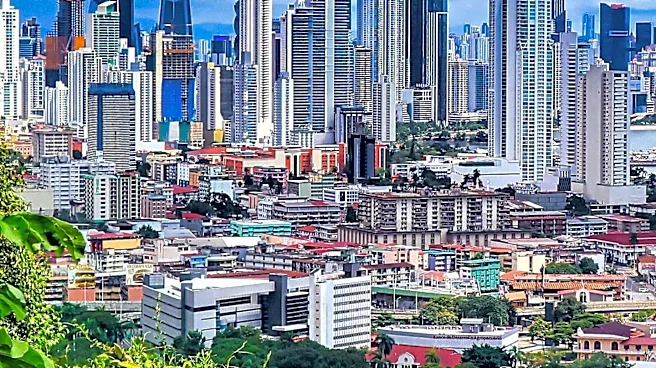
for Panama by offering global financing capabilities, access to international markets, and connections with institutional investors. President Mulino highlighted Panama's strong economic growth, reporting a 5.5% increase in the first half of the year, and projected exceeding the IMF's 3.8% growth forecast for the year. Discussions also covered major government-backed projects, including the Petroterminal de Panamá, electrical interconnection with Colombia and Ecuador, the Puerto Armuelles multipurpose dock, the Panama-David train, the third Metro line, and highway expansions. Additionally, investments for the Panama Canal were reviewed, with Ilya Espino de Marotta, administrator of the Panama Canal Authority (ACP), presenting ongoing projects such as two new ports, a gas pipeline, a logistics corridor, and the Río Indio reservoir.
Why It's Important?
This meeting underscores the growing interest of major financial institutions like Citi in emerging markets with strong economic performance and strategic logistical advantages. For the U.S., Panama's economic stability and infrastructure development are crucial given the Panama Canal's role in global trade, directly impacting U.S. import and export routes. Citi's commitment to providing financing and market access can facilitate further U.S. investment in Panama, potentially boosting American businesses involved in infrastructure, logistics, and technology. Fraser's recommendation for Panama to maintain its investment grade highlights the increasing selectivity of global financing programs, emphasizing the importance of fiscal discipline and a favorable investment climate for attracting international capital. The discussions on advanced technologies, such as Panama's inclusion in Pax Silica for semiconductor and AI supply chains, also signal potential collaboration opportunities for U.S. tech companies and contribute to strengthening regional supply chain resilience, which is a strategic interest for the U.S.
What's Next?
Following the meeting, Citi is expected to explore specific avenues for re-energizing its support for Panama, potentially leading to new financing agreements and increased access to international capital markets for Panamanian projects. President Mulino's government will likely continue to promote its major infrastructure initiatives and advanced technology strategies, such as the National Advanced Technologies Strategy for Semiconductors, Microelectronics, and Artificial Intelligence, to attract further foreign direct investment. Panama's efforts to maintain its investment grade will be critical, as global financing programs become more selective. The country will also continue its diplomatic and technical efforts to be removed from the list of non-cooperative jurisdictions in tax matters, which could further enhance its appeal to international investors. The ongoing investments in the Panama Canal, including new port terminals and a logistics corridor, are set to solidify Panama's position as a key global trade hub, with potential implications for shipping and logistics companies worldwide.
Beyond the Headlines
The engagement between Citi and Panama extends beyond immediate financial transactions, reflecting a broader trend of strategic partnerships between global financial powerhouses and nations with critical geopolitical and economic infrastructure. Panama's emphasis on advanced technologies, particularly its participation in Pax Silica, suggests a long-term vision to integrate into global high-tech supply chains, moving beyond its traditional role as a logistics hub. This shift could position Panama as a significant player in the semiconductor and AI sectors, potentially fostering a new wave of economic development and diversification. The focus on fiscal discipline and maintaining investment grade also highlights a global financial environment where capital is increasingly directed towards stable and well-governed economies. This could set a precedent for other developing nations seeking to attract foreign investment, emphasizing the importance of sound economic policies and transparent governance in securing international financial backing.