





What's Happening?
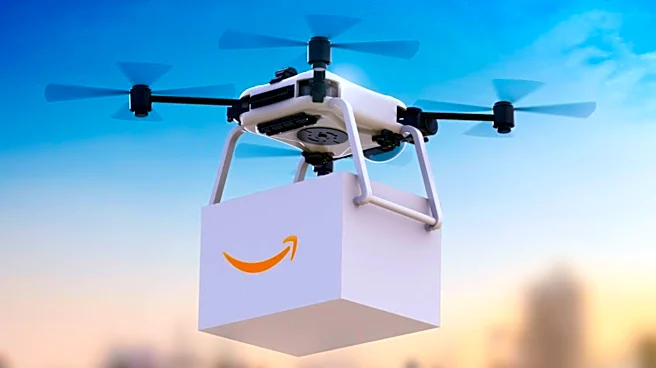
Amazon announced a significant expansion of its Prime Air drone delivery service, aiming to reach nearly 500 U.S. cities and towns by the end of 2026. This expansion could bring drone deliveries to millions more customers, with packages arriving in as
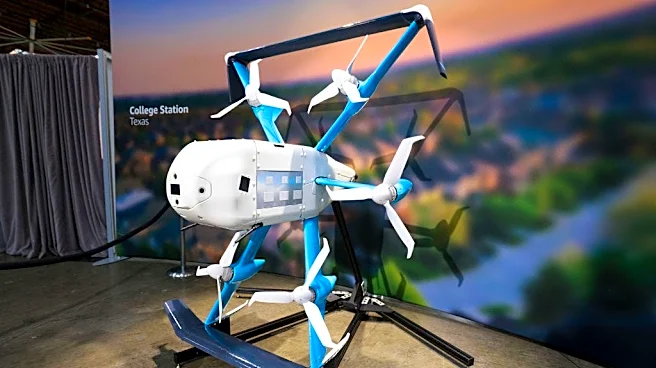
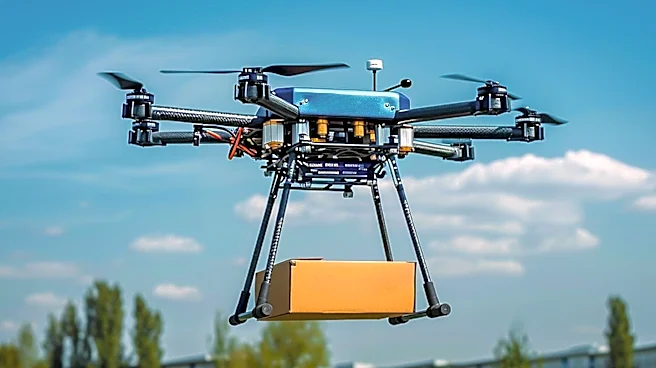
little as 30 minutes. Chattanooga, Tennessee, is being considered as a potential new market due to its existing Amazon infrastructure, including the CHA1 fulfillment center and a second delivery station planned for 2028. While Amazon has not confirmed specific cities, the company's focus for expansion is largely suburban areas, avoiding skyscrapers and major airports that complicate drone operations. Prime Air drones can carry packages up to 5 pounds, with free delivery for Prime members on orders over $50, and a fee for smaller or non-Prime orders. This expansion represents a sixfold increase in Prime Air's reach, moving from 11 sites across seven states to nearly 500 communities.
Why It's Important?
This ambitious expansion by Amazon signifies a major step forward in the widespread adoption of drone delivery technology in the U.S. If successful, it could revolutionize last-mile logistics, offering unprecedented speed and convenience for consumers. The move has significant implications for the e-commerce industry, potentially setting a new standard for delivery expectations and increasing competitive pressure on other retailers. For local economies, the establishment of drone delivery hubs could create new jobs and infrastructure investments. However, it also raises questions about regulatory frameworks, airspace management, noise pollution, and public acceptance of drones flying over residential areas. The success of this expansion will depend on Amazon's ability to navigate these challenges, including federal regulations and local community concerns, while ensuring safety and efficiency.
What's Next?
Amazon will continue to roll out its Prime Air service to new communities, with a goal of reaching 30 million customers by the end of this year and delivering half a billion packages by drone by the end of the decade. The company will need to secure necessary federal approvals and address local concerns in each new market. For cities like Chattanooga, the possibility of drone delivery means residents might soon see packages arriving from the sky, though specific timelines are not yet announced. Amazon will also likely continue to refine its drone technology, addressing limitations such as tree cover and landscaping that can hinder safe package delivery. The expansion will be closely watched by competitors, regulators, and consumers as it progresses, potentially shaping the future of retail and logistics.
Beyond the Headlines
Amazon's drone delivery expansion represents more than just a logistical upgrade; it's a significant step towards integrating autonomous technology into daily life. This move could fundamentally alter consumer behavior, making instant gratification a more common expectation for a wider range of products. Beyond convenience, the widespread use of delivery drones could have environmental implications, potentially reducing the carbon footprint associated with traditional delivery vehicles, though the energy consumption of drones themselves will be a factor. Socially, the sight of drones regularly traversing neighborhoods could shift public perception of unmanned aerial vehicles, moving them from novelty or military tools to everyday utility. However, concerns about privacy (e.g., drones equipped with cameras), noise pollution, and potential safety hazards will need continuous monitoring and regulation as this technology becomes more ubiquitous, prompting a broader societal discussion on the balance between technological advancement and community well-being.