


What's Happening?
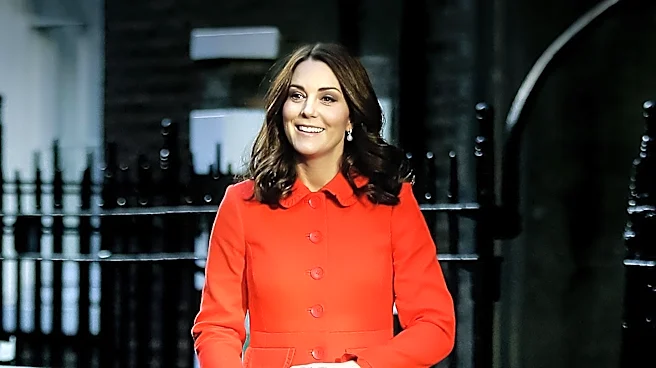
Catherine, Princess of Wales, has occasionally opted for gowns featuring daring thigh-splits, a departure from traditional royal fashion norms. These choices have been noted by royal fans and fashion commentators, particularly when she steps out in evening
wear. Examples include a cream Roland Mouret gown worn at a dinner hosted by The Thirty Club, a lace gown by Self Portrait at the UK premiere of 'A Street Cat Named Bob,' and a heavily embroidered mesh column dress from American designer Tory Burch during a royal tour of Bhutan. Even for daytime engagements, such as visiting the 'D-Day: Interception, Intelligence, Invasion' exhibition in 2019, she wore a navy and white polka dot dress from Alessandra Rich with a leg-baring button-up skirt. These selections highlight a more adventurous side to her style, showcasing her toned legs and occasionally incorporating elements like keyhole necklines, which are less common in royal attire.
Why It's Important?
The fashion choices of public figures, especially those in prominent roles like the Princess of Wales, often carry broader cultural and social significance. Her occasional deviation from traditional royal dress codes by wearing 'risky' thigh-split dresses can be seen as a subtle yet impactful statement on evolving perceptions of modernity and personal expression within established institutions. This trend could influence fashion industries by legitimizing more contemporary and daring styles for formal occasions, potentially boosting sales for designers whose aesthetics align with these choices. For the public, particularly younger generations, it might foster a sense of relatability and approachability, as it demonstrates a willingness to embrace current trends while still maintaining a regal presence. Conversely, it could also spark discussions among traditionalists about the appropriateness of such attire for royal engagements, reflecting ongoing societal debates about tradition versus modernity.
What's Next?
Given the Princess of Wales's increasing consciousness of her fashion influence, it is likely that her style will continue to evolve, balancing traditional expectations with contemporary trends. Future royal engagements may see her further experimenting with silhouettes, lengths, and colorways, potentially incorporating more modern elements while maintaining an overall elegant aesthetic. This ongoing evolution will likely be closely watched by fashion enthusiasts and the media, influencing trends and designer collections. The public's reaction, both positive and critical, will continue to shape the narrative around royal fashion, potentially encouraging other public figures to consider how their attire communicates messages about their roles and personal brands. Designers who align with her evolving style may see increased visibility and demand for their creations.
Beyond the Headlines
The Princess of Wales's choice to wear thigh-split dresses, while seemingly a minor fashion detail, touches upon deeper themes of female agency and the subtle subversion of traditional expectations within highly scrutinized public roles. In a world where royal women are often expected to adhere to strict sartorial guidelines, these 'risky' choices can be interpreted as a quiet assertion of individuality and a modern approach to femininity. It reflects a broader cultural shift where women in positions of power are increasingly defining their own style, rather than being confined by historical precedents. This could contribute to a more inclusive understanding of what constitutes 'appropriate' attire for women in leadership, potentially inspiring others to embrace personal style as a form of empowerment, even within conservative environments. It also highlights the ongoing tension between maintaining tradition and adapting to contemporary values.