






What's Happening?
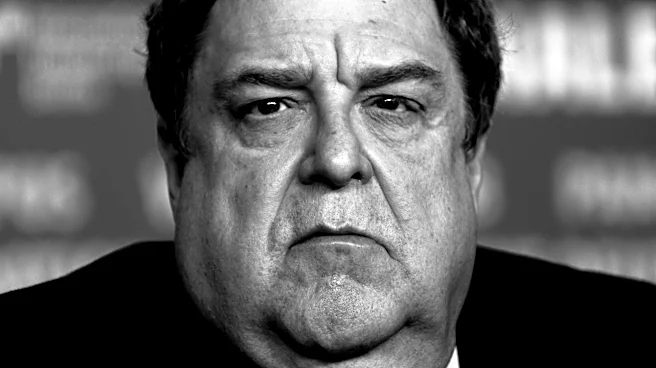
Actor John Goodman, 74, has openly discussed the unexpected challenges and psychological adjustments following his 200-pound weight loss. During an appearance on Josh Horowitz’s 'Happy Sad Confused' podcast, Goodman admitted that his body feels 'messed
up' and that he is still adjusting to his slimmer appearance, which has led to self-consciousness in certain situations. He recounted turning down a potentially revealing scene in HBO’s 'The Righteous Gemstones' due to discomfort with his transformed body, stating, 'My body is too messed up from losing all this weight… It’s weird.' Goodman also reflected on how his previous weight, which was nearly 400 pounds at its heaviest, might have impacted his acting career, suggesting it could have been a form of 'self-sabotage.' His weight loss journey involved sobriety, dietary changes, regular exercise, and stomach surgery.
Why It's Important?
This story is important as it sheds light on the often-overlooked psychological and emotional aspects of significant weight loss, particularly for public figures. While physical transformation is often celebrated, Goodman's candidness reveals that such changes can bring new forms of body image issues and self-perception challenges. His experience highlights that the journey to a healthier weight is not solely physical but also deeply mental, requiring a re-calibration of one's self-image. For the entertainment industry, it underscores the pressures actors face regarding their physical appearance and how personal health decisions can intersect with professional demands. Goodman's admission of potential 'self-sabotage' also offers a broader commentary on the complex relationship between personal well-being and career trajectory.
What's Next?
Goodman's continued public discussions about his weight loss journey may encourage a more nuanced conversation around body image and health in Hollywood and beyond. His experience could inspire others undergoing similar transformations to address the psychological aspects of their journey. For his career, his newfound comfort with his body, or lack thereof, might influence future role choices, particularly those involving physical exposure. The industry may also become more aware of the need for sensitivity and accommodation for actors undergoing significant personal changes. Goodman's focus on core training, balance training, and strength training indicates a commitment to long-term health and stability, suggesting a continued emphasis on physical well-being in his life.
Beyond the Headlines
Goodman's experience delves into the concept of 'phantom fat' or body dysmorphia that can occur after substantial weight loss, where an individual's mental image of themselves lags behind their physical reality. This psychological phenomenon is a critical, yet often unaddressed, component of weight management. His story also implicitly critiques the societal pressure to achieve a certain body type, revealing that even after reaching a 'desired' weight, internal struggles can persist. Furthermore, his reflection on 'self-sabotage' offers a deeper look into the psychological underpinnings of unhealthy habits and how they can manifest in various aspects of life, including career choices. It serves as a powerful reminder that health is holistic, encompassing both physical and mental well-being.