



What's Happening?
Swescan, a Swedish drone services provider, has secured regulatory approval to conduct drone operations where the remote pilot does not need to be physically present at the flight location. This authorization, a first for Sweden in this specific application,
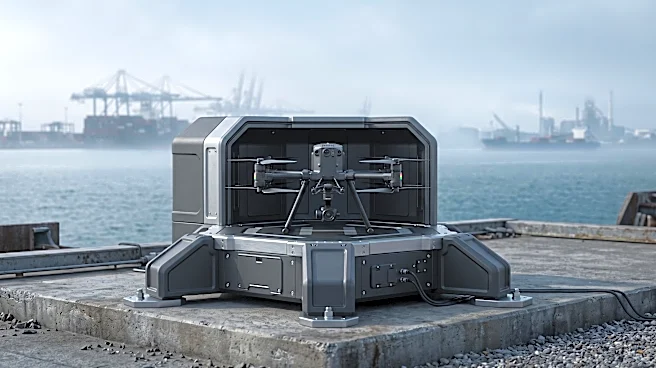
allows Swescan to use DJI Dock systems for beyond visual line of sight (BVLOS) missions. Drones can now be supervised and controlled remotely from dedicated control rooms located in Helsingborg or Karlstad. This development enables the deployment of permanent drone docking stations at customer sites, facilitating scheduled inspection and surveying missions without requiring personnel to travel for each flight. The system supports recurring missions, from daily inspections to less frequent flights, offering greater flexibility and availability.
Why It's Important?
This regulatory approval marks a significant step forward for industrial drone operations, particularly in making inspections more accessible and cost-effective. By eliminating the need for on-site pilots, companies can reduce travel requirements and the time needed to collect inspection data. This efficiency gain is crucial for industries requiring frequent monitoring, such as power plants, paper mills, aggregate production facilities, and airports. The ability to conduct security inspections and thermal imaging remotely can enhance safety and operational continuity. While BVLOS drone operations are not entirely new in Sweden, this specific authorization for remote-operated drone dock systems streamlines the process for industrial applications, potentially setting a precedent for similar regulatory frameworks in other countries, including the U.S., where drone integration into commercial sectors is a growing focus.
What's Next?
Swescan plans to expand the use of its remote-operated drone dock systems across various industrial applications, including surveying, security inspections, and thermal imaging to identify potential hazards. The company's generic SORA authorization allows it to adapt risk assessments for individual missions within its approved operations. This development suggests a trend towards more automated and remotely managed drone services, which could lead to increased adoption of drone technology in critical infrastructure monitoring and maintenance. Other countries and regulatory bodies may look to Sweden's experience as they develop their own frameworks for advanced drone operations. The success of Swescan's model could encourage further innovation in drone docking stations and remote supervision technologies, making drone-based services more scalable and integrated into daily industrial operations.
Beyond the Headlines
This advancement in drone technology and regulation has broader implications for the future of work and automation. The ability to conduct complex operations remotely reduces human exposure to hazardous environments and optimizes labor resources. It also highlights the increasing sophistication of drone capabilities, moving beyond simple aerial photography to integrated, autonomous systems. The legal challenges Swescan faced regarding lengthy approval processes underscore the regulatory hurdles that innovative technologies often encounter, emphasizing the need for agile and responsive regulatory bodies. This shift towards remote operations could also impact urban planning and infrastructure development, as the need for physical presence diminishes, potentially leading to new models for industrial site management and surveillance. The ethical considerations around data privacy and the security of remotely operated systems will also become increasingly important as these technologies become more widespread.