
What's Happening?
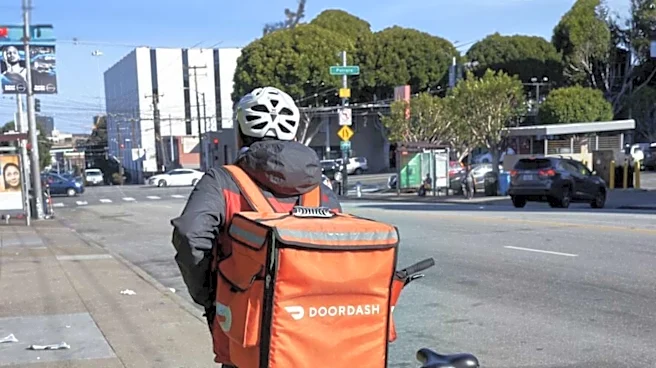
DoorDash, an American online food ordering and food delivery company, is significantly expanding its services beyond restaurant and grocery deliveries into the clothing retail sector. The company announced
new partnerships with prominent brands including Macy's, Anthropologie, The North Face, Vans, and Timberland. These collaborations will allow customers to order products from these retailers directly through the DoorDash platform, with deliveries expected in as little as an hour. Macy's, which has previously utilized DoorDash for same-day deliveries, will now have its goods formally integrated onto the DoorDash website. In addition to delivery, DoorDash is also rolling out a nationwide return service, allowing drivers to pick up items purchased through the app for a flat fee of $7.99. This expansion follows DoorDash's earlier ventures into grocery delivery in 2020 and recent partnerships with other retailers like Gap, Costco, Barnes & Noble, and Kohl's, indicating a strategic move to diversify its offerings and attract a broader customer base. Rival company Uber Eats has also been expanding its retail delivery services, including a partnership with Foot Locker and nationwide Costco deliveries.
Why It's Important?
This strategic expansion by DoorDash into clothing delivery and return services marks a significant shift in the e-commerce and logistics landscape, impacting both consumers and the retail industry. For consumers, it offers unprecedented convenience, allowing for rapid delivery of clothing items and a simplified return process, potentially reducing the friction associated with online shopping. This could lead to increased consumer expectations for immediate gratification across various retail categories. For the retail partners, it provides an additional sales channel and leverages DoorDash's extensive delivery network, enabling them to compete more effectively in the fast-paced e-commerce market, especially against giants like Amazon. The introduction of a return service could also enhance customer loyalty and reduce the operational burden on retailers. However, it also poses challenges for traditional brick-and-mortar stores that may struggle to match the speed and convenience of such services. The move intensifies competition within the delivery sector, as companies like Uber Eats are also diversifying, pushing innovation and potentially leading to more comprehensive on-demand services for a wider range of goods.
What's Next?
DoorDash plans to roll out its return service nationwide in November, following successful testing in select U.S. markets. This full-scale implementation will likely be a key focus, as the company assesses its operational efficiency and customer adoption. The success of these new clothing delivery and return partnerships will determine the extent of DoorDash's future expansion into other retail categories. Competitors like Uber Eats are also actively pursuing similar diversification strategies, suggesting an escalating arms race in the on-demand delivery market. This competition could lead to further innovations in delivery speed, service offerings, and pricing models. Retailers not yet partnered with major delivery platforms may feel pressure to establish similar collaborations to remain competitive. Furthermore, the increased volume of deliveries and returns could impact DoorDash's driver network, potentially leading to adjustments in driver compensation models or recruitment efforts to meet demand. The long-term implications could include a fundamental reshaping of how consumers shop for and return non-perishable goods, with a greater emphasis on speed and convenience.
Beyond the Headlines
The expansion of DoorDash into clothing delivery and returns signifies a broader trend towards the 'uberization' of retail, where instant gratification and convenience become paramount across all consumer goods. This shift has profound implications for urban planning, as increased delivery traffic could exacerbate congestion and demand for curb space. Environmentally, the rise in last-mile deliveries raises concerns about carbon emissions and packaging waste, prompting questions about sustainable logistics solutions. Culturally, it further embeds the expectation of on-demand services into daily life, potentially altering consumer behavior and diminishing the traditional shopping experience. Legally, the classification of DoorDash drivers as independent contractors remains a contentious issue, and the expansion of services could intensify debates around labor rights, wages, and benefits for gig economy workers. The success of these partnerships could also lead to a re-evaluation of physical retail spaces, as more transactions shift online, potentially transforming shopping malls and main streets. This evolution highlights the ongoing convergence of technology, logistics, and retail, creating a complex ecosystem with far-reaching societal and economic impacts.