






What's Happening?
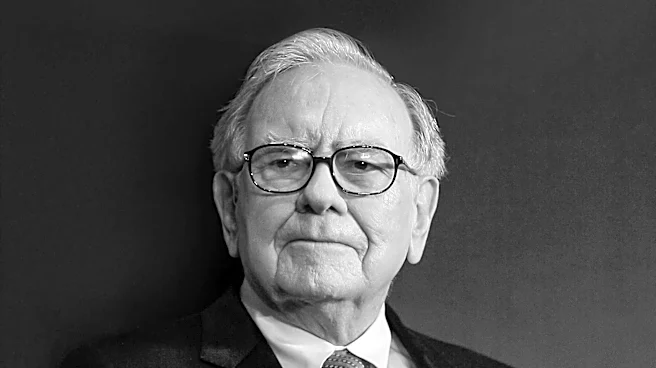
Warren Buffett's 2005 advice, warning investors that 'excitement and expenses are their enemies,' is being highlighted as potentially relevant amidst a possible AI stock market downturn. The Nasdaq-100, which includes major AI stocks, has recently fallen
17% from its October record, with the S&P 500 down 8%. This situation draws parallels to the dot-com bubble of the late 1990s and early 2000s, which Buffett navigated without investing in tech companies. He noted in 2000 that while society would be transformed by tech, Berkshire Hathaway did not own such stocks. The Nasdaq peaked shortly after, leading to an 83% loss for a Nasdaq-100 tracking fund by October 2002, taking 15 years to recover. Buffett emphasized that bubbles often start with a true idea, but widespread buying for the wrong reasons leads to crashes. He also cautioned against high costs from excessive trading and untimely entries or exits from the market.
Why It's Important?
Buffett's long-standing investment philosophy, particularly his warnings against market excitement and high expenses, offers critical guidance for U.S. investors facing current market volatility, especially in the AI sector. His historical perspective from the dot-com bust illustrates the potential for significant losses and prolonged recovery periods for those who invest at market peaks. The advice underscores the dangers of speculative trading driven by 'excitement' and the financial erosion caused by 'expenses' from frequent trading or high management fees. For individual investors, particularly those nearing retirement, understanding these principles can be crucial for preserving savings. The current market dip in AI stocks serves as a real-time test of these principles, highlighting the potential for substantial financial impact on portfolios heavily weighted in rapidly appreciating sectors.
What's Next?
Investors are advised to assess their portfolios for 'excitement' by examining their allocation to high-growth sectors like AI, similar to how a hypothetical 59-year-old investor had 29% in a Nasdaq-100 fund at its peak. The second immediate step is to prevent 'fear' from driving up expenses through panic selling. Selling an index fund after a significant drop, such as the recent 17% decline in the Nasdaq-100, constitutes a trade that necessitates another correct trade later to recover. For those still contributing to retirement accounts, consistently buying into funds at lower prices can be a strategic approach, aligning with Buffett's advice to be 'greedy only when others are fearful.' The long-term performance of AI businesses will ultimately determine the 'weight' of these investments, a factor currently unknown.
Beyond the Headlines
The current market dynamics surrounding AI stocks and Buffett's cautionary tales highlight a recurring theme in financial markets: the psychological impact of bubbles and busts. The 'excitement' phase often leads to herd mentality, where investors chase returns without fundamental analysis, driven by fear of missing out. Conversely, the 'fear' phase can trigger panic selling, locking in losses and preventing recovery. This cycle underscores the ethical dimension of investment advice, emphasizing prudence and long-term strategy over short-term gains. Legally, regulators often scrutinize market manipulation and misleading information during speculative booms, though Buffett's advice focuses on individual investor discipline. Culturally, the allure of rapid wealth creation through new technologies like AI often overshadows the historical lessons of market cycles, making Buffett's timeless wisdom particularly relevant.