






What's Happening?
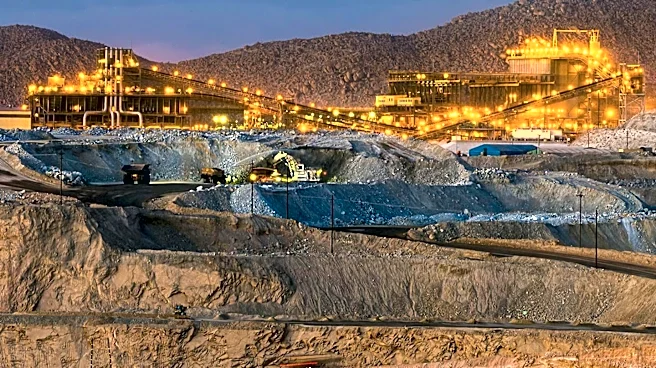
Ma’aden (1211.SR) and Aramco (2222.SR) have announced their intention to form a joint venture (JV) focused on mineral exploration and hard-rock mining in Saudi Arabia. The two companies have signed a shareholders’ agreement to combine their strengths
in exploring for copper and other critical minerals. The JV is expected to be owned 51% by Ma’aden and 49% by Aramco. Their primary focus will be on exploration within Zone-4, also known as the Transition Zone, located within the Arabian Platform. This exploration area spans approximately 182,000 square kilometers, representing nearly 10% of Saudi Arabia’s total land area. Copper will be a main focus for the JV, as it is a key material in the energy transition, accounting for over 20% of the US$1.2 trillion mined metals market. Aramco Vice President of Transition Minerals Saleh M. Al Saleh highlighted that the partnership will leverage Aramco’s extensive geological and geophysical data, accumulated over 90 years, to accelerate the discovery of key transition minerals. Ma’aden Executive Vice President for Exploration Darryl Clark emphasized that combining Ma’aden’s exploration expertise with Aramco’s knowledge of the Arabian Platform will enable faster and smarter exploration.
Why It's Important?
This joint venture holds significant implications for the U.S. and global markets, particularly in the context of the energy transition. Copper is a critical component in renewable energy technologies, electric vehicles, and various high-tech industries, all of which are vital for the U.S. economy's future growth and sustainability. The U.S. currently relies on a global supply chain for copper, and any new major discoveries or production increases can help stabilize prices and ensure a more secure supply. This partnership could contribute to diversifying the global supply of critical minerals, reducing potential vulnerabilities associated with concentrated supply sources. For U.S. industries, a more robust and diversified supply of copper could lead to greater stability in manufacturing costs and improved competitiveness. Furthermore, Saudi Arabia's strategic move to develop its mining sector aligns with its Vision 2030, aiming to diversify its economy beyond oil. This could open new avenues for U.S. companies in technology, engineering, and services to participate in the development of Saudi Arabia's emerging mining industry, fostering economic cooperation and investment.
What's Next?
The immediate next steps for the Ma’aden and Aramco joint venture will involve initiating exploration activities within the designated Zone-4 of the Arabian Platform. The companies will focus on integrating their respective expertise and data to identify and assess potential copper and other critical mineral deposits. This will likely include detailed geological surveys, geophysical studies, and exploratory drilling. The JV aims to accelerate the discovery process, potentially utilizing advanced technologies such as high-performance computing and artificial intelligence, as mentioned by Aramco's Vice President of Transition Minerals. Successful exploration could lead to the development of new mining projects, which would require substantial capital investment and infrastructure development. The partnership's progress will be closely watched by the global mining industry and governments seeking to secure critical mineral supplies. Future announcements are expected regarding exploration results, resource estimates, and potential development plans, which could further influence global mineral markets and supply chain strategies.
Beyond the Headlines
This joint venture represents more than just a business deal; it signifies a strategic pivot for Saudi Arabia and a broader global trend towards securing critical minerals. For the U.S., it highlights the ongoing imperative to de-risk supply chains for essential materials needed for its technological and green energy transitions. The ethical and environmental considerations of large-scale mining operations will be paramount. As the JV progresses, there will be increased scrutiny on its environmental impact, labor practices, and adherence to international sustainability standards. The development of new mining capabilities in Saudi Arabia could also shift geopolitical dynamics, as nations vie for control or access to these vital resources. This initiative could also spur innovation in mining technologies, particularly in areas like sustainable extraction and processing, which could have ripple effects across the global mining industry. Ultimately, the success of this venture could contribute to a more diversified and resilient global supply of critical minerals, benefiting economies worldwide, including the U.S., by fostering greater stability and predictability in resource availability.