






What's Happening?
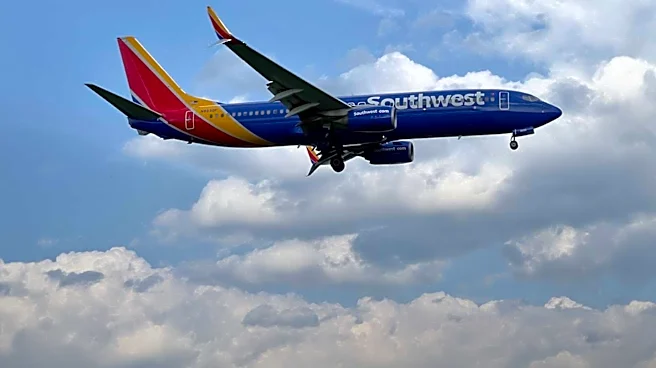
Southwest Airlines has entered into a new $2 billion revolving credit agreement. The agreement was made with JPMorgan Chase Bank and Citibank, which are acting as co-administrative agents. This credit facility is set to mature in August 2031 and includes
an uncommitted accordion feature, allowing Southwest Airlines the flexibility to increase the total size of the facility to $3 billion if needed. The funds obtained from these loans are designated for working capital and general corporate purposes. This includes potential acquisitions, as stated by the company. This financial move provides Southwest Airlines with significant liquidity and financial flexibility for its ongoing operations and future strategic initiatives.
Why It's Important?
This $2 billion credit agreement is a crucial financial maneuver for Southwest Airlines, providing a substantial buffer for its operational needs and strategic growth. In the highly capital-intensive airline industry, access to flexible credit is vital for managing cash flow, funding fleet expansions, and responding to market fluctuations. The ability to increase the facility to $3 billion through an uncommitted accordion feature offers an additional layer of security and adaptability, allowing the airline to seize opportunities or mitigate unforeseen challenges without immediate recourse to equity markets. This financial stability can enhance investor confidence and potentially lead to more favorable borrowing terms in the future. For the U.S. airline sector, such agreements signal a continued focus on strengthening balance sheets and ensuring long-term viability, especially in an environment that can be susceptible to economic shifts and fuel price volatility. It also positions Southwest Airlines to potentially pursue acquisitions or other growth strategies, impacting the competitive landscape of domestic air travel.
What's Next?
With this credit agreement in place, Southwest Airlines is well-positioned to continue its operations and pursue its strategic objectives. The funds will be allocated towards working capital, ensuring smooth day-to-day functioning, and general corporate purposes, which could include investments in technology, infrastructure, or customer service enhancements. The mention of acquisitions as a potential use of funds suggests that Southwest Airlines may be exploring opportunities for expansion or consolidation within the airline industry. The maturity date in August 2031 provides a long-term financial horizon, allowing for stable planning. The uncommitted accordion feature means the airline can tap into additional capital if market conditions or strategic needs warrant it, without having to renegotiate a new agreement from scratch. This financial flexibility will be key as the airline navigates the evolving economic landscape and competitive pressures.
Beyond the Headlines
The securing of a substantial credit facility like this by Southwest Airlines goes beyond immediate financial needs; it reflects a strategic approach to risk management and future growth in a dynamic industry. The choice of a revolving credit agreement, rather than a term loan, provides the airline with continuous access to funds that can be drawn, repaid, and redrawn as needed, offering maximum flexibility. This type of financing is often preferred by companies with fluctuating working capital requirements. Furthermore, the involvement of major financial institutions like JPMorgan Chase Bank and Citibank as co-administrative agents underscores the airline's strong creditworthiness and market confidence. This financial backing could enable Southwest Airlines to be more aggressive in its market strategies, potentially leading to increased competition in routes, pricing, and service offerings across the U.S. domestic market. It also highlights the ongoing importance of robust financial partnerships for large corporations in maintaining operational resilience and pursuing strategic ambitions.