






What's Happening?
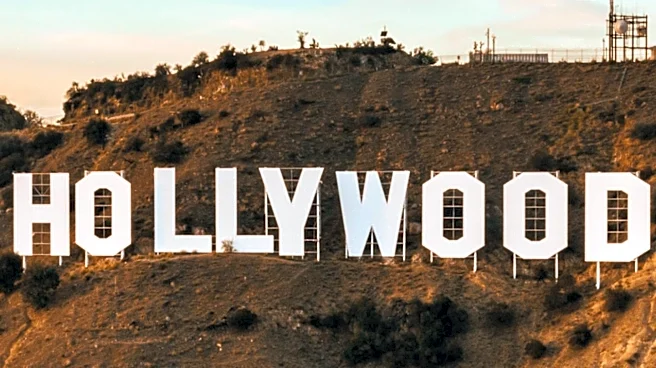
The animation industry in Hollywood is experiencing significant changes due to the increasing influence of artificial intelligence (AI). Traditional animation roles, such as those of animators, visual-effects artists, and storyboard artists, are being
affected as AI tools become more integrated into the creative process. Major studios like Lionsgate and Netflix are investing in AI technologies to streamline production, which has led to concerns about job security among traditional artists. The closure of academic programs like USC's Expanded Animation program and the California College of the Arts further limits opportunities for emerging talent. Despite these challenges, some artists are adapting by incorporating AI into their work, as seen with Xindi Zhang, a recent graduate who used AI for her award-winning thesis film.
Why It's Important?
The shift towards AI in Hollywood's animation sector has broad implications for the industry and its workforce. As AI tools become more prevalent, traditional roles may diminish, leading to job losses and a potential decline in the quality of creative output. This transition could also impact the educational landscape, as fewer programs are available to train new talent in traditional animation techniques. The reliance on AI may result in a homogenization of creative content, as AI-generated work often lacks the unique touch of human artistry. This evolution poses ethical and economic challenges, as artists must navigate a rapidly changing job market while studios balance cost-saving measures with maintaining artistic integrity.
What's Next?
As AI continues to integrate into Hollywood, the industry may see further consolidation of roles and a shift in the skills required for animation jobs. Studios might need to establish guidelines for the ethical use of AI to protect artists' rights and ensure fair compensation. The public's acceptance of AI-generated content will also play a crucial role in shaping the future of the industry. Stakeholders, including artists, studios, and audiences, will need to engage in discussions about the value of human creativity versus AI efficiency. The outcome of these discussions could influence the direction of Hollywood's creative processes and the preservation of traditional animation techniques.
Beyond the Headlines
The rise of AI in animation raises questions about the cultural and artistic implications of technology-driven creativity. As AI tools become more sophisticated, the line between human and machine-generated art may blur, challenging traditional notions of authorship and originality. This shift could lead to a reevaluation of what constitutes art and creativity in the digital age. Additionally, the potential for AI to perpetuate biases present in its training data highlights the need for careful oversight and ethical considerations in its application. The industry's response to these challenges will shape the future of animation and its role in cultural expression.