






What's Happening?
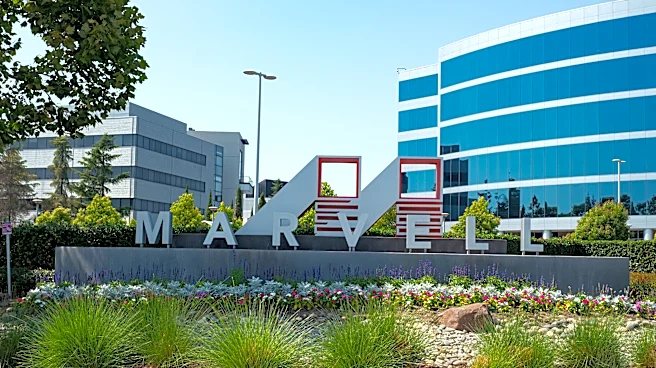
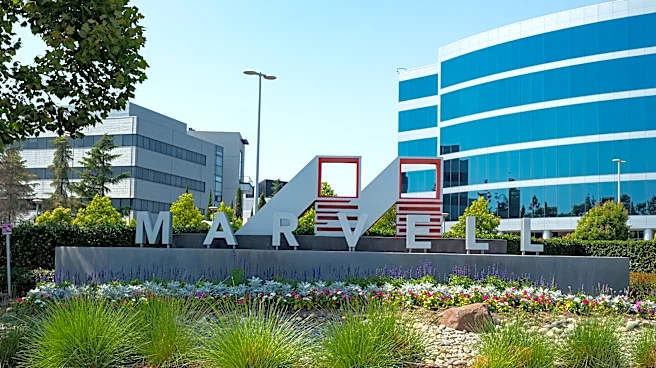
Lumentum (LITE:NASDAQ) shares have fallen 42% since October 28, despite the company reporting its best fiscal first quarter in history. This significant decline is directly linked to Marvell Technology's (MRVL:NASDAQ) stock performance, as Marvell agreed
to acquire Lumentum in an all-stock deal on November 2. The acquisition terms stipulate that Lumentum shareholders would receive 4.5 Marvell shares for each Lumentum share. Initially, this offer was valued at approximately $1,132 per share, representing a 23.9% premium. However, Marvell's stock subsequently dropped by 45%, consequently reducing the value of the acquisition offer. Lumentum's fiscal first-quarter results were robust, with revenue increasing by 136.5% to $1.26 billion and non-GAAP EPS reaching $4.57, up from $1.10 a year earlier. The company also provided strong second-quarter guidance, exceeding analyst expectations.
Why It's Important?
This situation highlights the inherent risks in all-stock mergers, where the value of the acquiring company's shares directly impacts the value received by the target company's shareholders. Despite Lumentum's strong financial performance, its stock is being negatively affected by external factors related to its acquirer. Marvell's interest in Lumentum stems from the increasing demand for optical technology in AI networking, as data clusters transition from copper to light. Marvell aims to integrate Lumentum's laser technology in-house to enhance its offerings in this evolving market. The proposed merger also anticipates over $1 billion in annual cost synergies and is expected to be accretive to Marvell's non-GAAP EPS in its first year post-closing. Lumentum's strong GAAP gross margin, which climbed to 51.0% from 34.0% a year earlier, underscores its value in a market experiencing a laser shortage.
What's Next?
The immediate next test for the deal's viability and Lumentum's stock will be Marvell's December 1 earnings report. The performance and outlook provided by Marvell will be crucial in determining whether its stock can stabilize or recover, thereby impacting the final value of the acquisition for Lumentum shareholders. Furthermore, the proposed merger faces a significant antitrust review process, which is expected to last between 12 to 18 months and could involve scrutiny from authorities in China. The outcome of this regulatory review will be a critical determinant of whether the deal ultimately closes. Nvidia, which has invested $2 billion in each company, also has a vested interest in the successful completion of this merger, as its stakes would consolidate within the combined entity.
Beyond the Headlines
The scenario involving Lumentum and Marvell Technology illustrates the complex interplay between corporate valuations, market sentiment, and strategic acquisitions in the high-tech sector. Even a company with stellar individual performance can see its market value eroded due to the performance of a prospective acquirer in an all-stock deal. This situation also underscores the strategic importance of vertical integration in the semiconductor and networking industries, particularly as AI infrastructure demands specialized components like lasers. Marvell's desire to bring laser technology in-house reflects a broader industry trend towards securing critical supply chains and enhancing control over key technological components to maintain a competitive edge in rapidly evolving markets. The antitrust review also highlights the increasing regulatory scrutiny on consolidation within critical technology sectors, especially those with national security implications or significant market power.