







What's Happening?
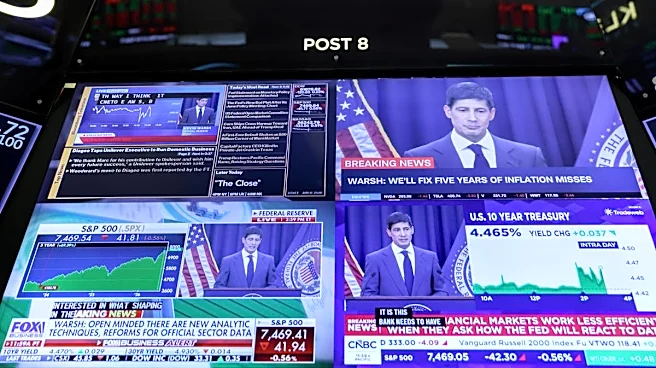
Federal Reserve Chairman Kevin Warsh has announced a significant restructuring of the Federal Reserve's approach to monetary policy. In his first major move since taking office, Warsh has established five task forces to review and potentially revise the Fed's
practices. These task forces will examine various aspects of the Fed's operations, including communication strategies, data utilization, inflation perspectives, and the management of the Fed's $6.7 trillion balance sheet. Warsh's initiative aims to ensure that the Federal Reserve is well-prepared for future challenges and remains focused on its core mission. This move marks a departure from Warsh's previous critical stance towards the Fed, as he now emphasizes collaboration and a positive outlook on the institution's capabilities.
Why It's Important?
Warsh's initiative represents a potential shift in how the Federal Reserve operates, with implications for U.S. monetary policy and economic stability. By focusing on a comprehensive review of the Fed's practices, Warsh aims to enhance transparency and effectiveness in policy-making. This could lead to more informed decisions that better address economic challenges such as inflation and technological advancements. The task forces' findings may influence future policy directions, impacting financial markets, interest rates, and economic growth. Stakeholders, including investors and policymakers, will closely monitor these developments as they could reshape the Fed's role in the U.S. economy.
What's Next?
The task forces will begin their work by examining current practices and considering alternatives. Their recommendations will be presented to policymakers for consideration, potentially leading to significant changes in the Fed's operations. As Warsh continues to implement his vision, reactions from financial markets, political leaders, and economic analysts will be critical in shaping the future of U.S. monetary policy. The outcomes of this initiative could influence the Fed's approach to managing inflation, interest rates, and economic growth in the coming years.