









What's Happening?
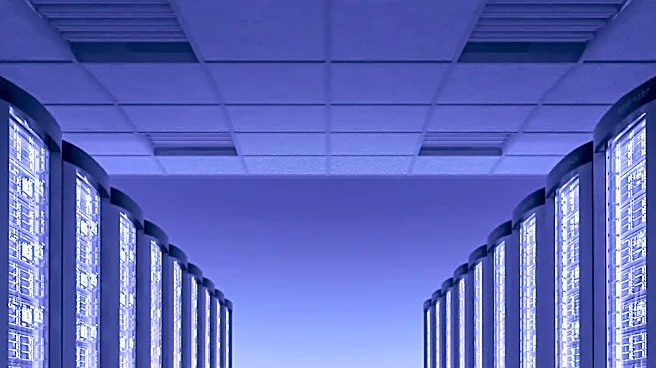
The rapid expansion of AI data centers in the United States is placing unprecedented demands on the national power grid. These centers, each consuming as much electricity as a city of 80,000 people, are being constructed in areas where the grid infrastructure
is not designed to support such high demand. The current grid, with its limited capacity and lengthy connection timelines, is unable to meet the immediate needs of these projects. In response, some companies are turning to linear generators, which can operate independently of the grid. These generators use a low-temperature, flameless reaction to convert fuel into electricity, offering a flexible and scalable power solution that can be deployed quickly. This technology allows data centers to generate power on-site, bypassing the need for grid connections and substation upgrades.
Why It's Important?
The strain on the U.S. power grid from AI data centers highlights a critical infrastructure challenge. As the demand for AI capabilities grows, so does the need for reliable and scalable power solutions. The adoption of linear generators represents a significant shift in how energy is produced and consumed, potentially reducing dependency on traditional grid infrastructure. This development could have far-reaching implications for various sectors, including manufacturing, defense, and healthcare, all of which rely on stable power supplies. By enabling faster and more flexible energy deployment, linear generators could enhance U.S. competitiveness in the global AI race and support broader economic growth.
What's Next?
As more companies invest in on-site power generation, the landscape of energy production in the U.S. is likely to evolve. The adoption of linear generators could accelerate, driven by the need for rapid deployment and the ability to operate independently of the grid. This shift may prompt regulatory changes to accommodate new energy technologies and infrastructure. Additionally, the economic benefits of job creation and local energy production could garner support from policymakers and communities. The ongoing development and commercialization of linear generation technology will be crucial in shaping the future of energy and AI infrastructure in the U.S.