






What's Happening?
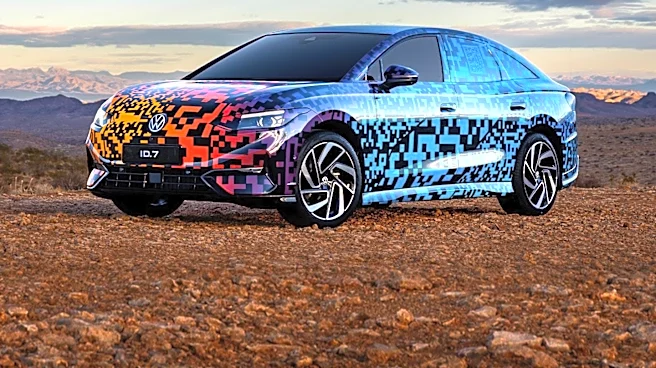
Volkswagen Group has reported a substantial operating loss of €5.8 billion in the third quarter of 2026, significantly exceeding analyst predictions. This marks the company's worst quarterly financial performance since the Dieselgate scandal in 2015.
For the nine-month period ending September 2026, the company posted a mere €0.1 billion operating profit, a sharp decline from €5.4 billion in the same period of 2025. According to CFO Arno Antlitz, the decline is primarily due to special items totaling €8.7 billion, including €6.4 billion in impairment charges on Porsche goodwill and approximately €1 billion in non-cash impairment adjustments on assets in China. Other contributing factors include a weak market in China, increased global pricing and competitive pressures, and a higher share of lower-margin electric vehicles in sales. Group vehicle sales for the nine-month period were down 11% at 5.9 million vehicles, with sales revenue slightly decreasing to €233.4 billion from €238.7 billion.
Why It's Important?
The significant financial downturn at Volkswagen Group, a major global automotive manufacturer, has broad implications for the U.S. automotive market and related industries. While the immediate losses are primarily European-centric, the company's struggles in key markets like China and the impact of global competitive pressures can affect its U.S. operations and investment strategies. U.S. tariffs, as noted by CFO Arno Antlitz, also contribute to the financial strain, potentially leading to higher costs for consumers or reduced product offerings in the U.S. market. The company's commitment to electric mobility, with EVs accounting for 40% of its European order bank, indicates a strategic shift that could influence the availability and pricing of electric vehicles in the U.S. market. However, the lower profitability of EVs compared to combustion-engine vehicles presents a challenge that could slow down the transition to electric vehicles if not addressed effectively, impacting U.S. environmental goals and consumer choices.
What's Next?
Volkswagen Group's CFO, Arno Antlitz, has emphasized the urgent need for swift and decisive action to address the financial losses. The company plans to implement a comprehensive cost program totaling approximately €31 billion, focusing on a streamlined model range, simpler structures, improved vehicle costs, lower overheads, increased plant efficiency, and faster technology development. This strategic overhaul aims to sustainably improve profitability, which currently stands at an operating return on sales before special items of 3.8% after nine months, deemed too low for continued strong investment in the future. The success of these measures will be critical for Volkswagen's global competitiveness and its ability to maintain its leadership in electric mobility, particularly in Europe. The company's performance in the coming quarters will reveal the effectiveness of these cost-cutting and efficiency-boosting initiatives, and how they might influence its global market presence, including in the U.S.
Beyond the Headlines
The financial challenges faced by Volkswagen Group highlight a broader trend within the automotive industry: the complex and often costly transition to electric vehicles. While Volkswagen is committed to leading in electric mobility, the current lower profitability of EVs compared to traditional combustion-engine vehicles poses a significant hurdle. This situation underscores the economic pressures on legacy automakers as they invest heavily in new technologies and infrastructure while simultaneously managing declining sales in established markets. The 'Electric Urban Car Family,' with 150,000 orders, demonstrates consumer interest in EVs, but converting this interest into profitable sales remains a key challenge. The company's struggles also reflect the intensifying global competition and pricing pressures, particularly from emerging markets and new entrants in the EV space. This dynamic could lead to further consolidation in the automotive industry or force companies to innovate rapidly to find sustainable business models for the electric era.